
A quiet country prayer where love is measured not by words, but by the courage to reach out and feel another soul.
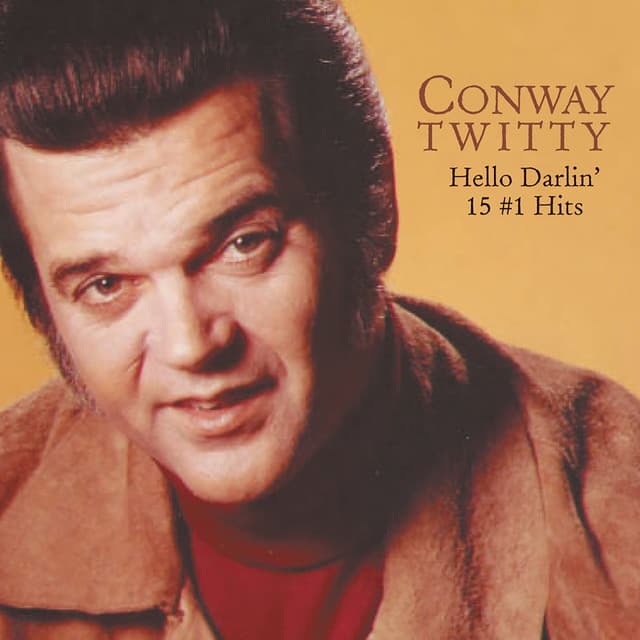
Released in 1973, Touch The Hand by Conway Twitty rose to the very top of the Billboard Hot Country Singles chart, becoming a number one record during one of the most commercially and artistically assured periods of his career. The song appeared on the album You’ve Never Been This Far Before, a project that captured Twitty at a moment when his voice, his themes, and his audience were in rare alignment. By then, he was no longer proving himself. He was refining a language of intimacy that few in country music could speak as fluently.
At its surface, Touch The Hand is disarmingly simple. There is no dramatic confession, no sweeping romantic climax. Instead, the song centers on a single, restrained gesture. To touch the hand of someone is to ask permission to be close, to test the fragile boundary between solitude and connection. Twitty understood that the most powerful emotions often arrive quietly, and this song is built entirely around that truth. It unfolds like a whispered conversation in a room where both people are afraid to speak too loudly, for fear the moment might break.
What makes the song endure is its emotional maturity. This is not the urgency of young love or the recklessness of desire. It is the voice of someone who has lived long enough to know that closeness carries risk. The lyrics suggest hesitation, self awareness, and respect. Twitty does not demand affection. He asks for it, carefully. In doing so, he elevates vulnerability to something almost sacred. The act of reaching out becomes a confession of need, trust, and hope, all without a single grand declaration.
Musically, the arrangement mirrors this restraint. The production is clean and unhurried, allowing Twitty’s voice to remain the focal point. His delivery is warm but controlled, rich with nuance. Every syllable feels weighed and considered. There is a sense that he is not performing at the listener, but confiding in them. That intimacy was a hallmark of his 1970s recordings, and Touch The Hand stands among the finest examples of his ability to sound both strong and tender at once.
Culturally, the song reflects a shift in country music during that era. Male vulnerability was no longer a liability. Artists like Twitty were redefining masculinity not as dominance, but as emotional honesty. This record did not rely on novelty or spectacle to reach number one. It succeeded because listeners recognized themselves in its quiet longing. Many had lived these moments, sitting close to someone, wondering if a small gesture might change everything.
Decades later, Touch The Hand remains a masterclass in emotional economy. It reminds us that some of the most meaningful love stories are written in the smallest movements. A hand extended. A pause. A shared breath. In the vast catalog of Conway Twitty, this song endures as a gentle testament to the power of understatement, and to the timeless human desire to be seen, felt, and accepted without having to ask for more than a touch.