
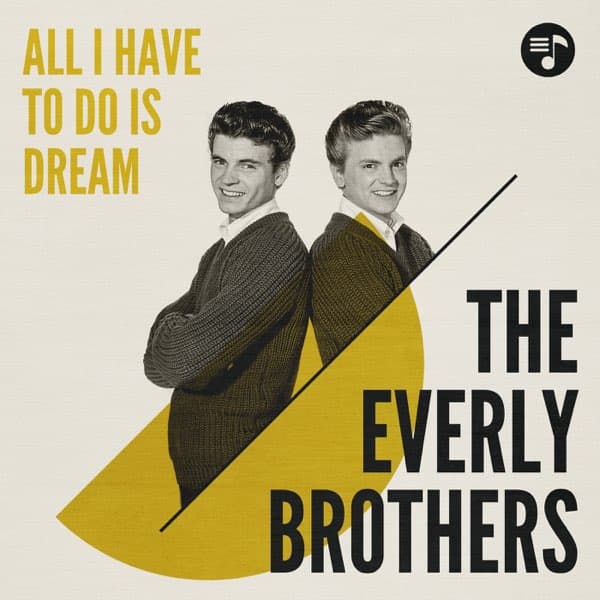
Tender reverie where longing becomes sanctuary and love survives entirely in the realm of dreams.
Released in 1958, All I Have to Do Is Dream arrived as a cultural moment rather than merely a single, cementing The Everly Brothers as architects of a new emotional language in American popular music. Issued on their self titled debut The Everly Brothers, the song achieved a rare and historic feat by reaching number one simultaneously on the Billboard pop, country, and rhythm and blues charts, an accomplishment that underscored its universal emotional reach across audiences that were otherwise sharply divided by genre and generation.
At its core, All I Have to Do Is Dream is a masterclass in restraint. Written by the prolific husband and wife team Boudleaux and Felice Bryant, the song resists melodrama and instead inhabits a quiet ache, one that feels deeply private yet instantly recognizable. There is no elaborate narrative, no dramatic rupture or reconciliation. The pain is internalized. Love is absent in the waking world but vividly alive in sleep, where the singer can still touch, hold, and believe. This conceptual simplicity is precisely what gives the song its enduring power.
The Everly Brothers’ performance is inseparable from that emotional architecture. Don and Phil Everly’s close harmony does not merely decorate the melody but defines it. Their voices move together with such intimacy that they sound less like two singers than a single consciousness split into harmony and echo. That unity reinforces the song’s theme. Even in loneliness, there is a sense of connection, if not to the beloved, then to the memory of love itself. The guitar figure that opens the track is equally economical, a soft, cyclical phrase that mirrors the looping nature of dreams and longing.
Lyrically, the song speaks to a particular kind of heartbreak that is neither explosive nor bitter. It is the ache of acceptance. The singer knows that waking life offers no resolution, yet he does not rage against it. Instead, he retreats inward, finding solace in imagination and sleep. This emotional posture resonated profoundly in the late nineteen fifties, a period often remembered for its optimism but quietly marked by emotional repression and rigid social roles. All I Have to Do Is Dream gave voice to feelings that could not always be spoken aloud.
Its cultural legacy lies in how effortlessly it bridges innocence and sophistication. The song is accessible enough to feel like a lullaby, yet emotionally complex enough to reward decades of listening. It influenced generations of artists who recognized that vulnerability, when expressed with clarity and grace, can be more powerful than any grand declaration. More than half a century later, All I Have to Do Is Dream remains a reminder that some of the most enduring love songs are not about possession or fulfillment, but about the quiet, human act of remembering what it felt like to love, even if only in dreams.