
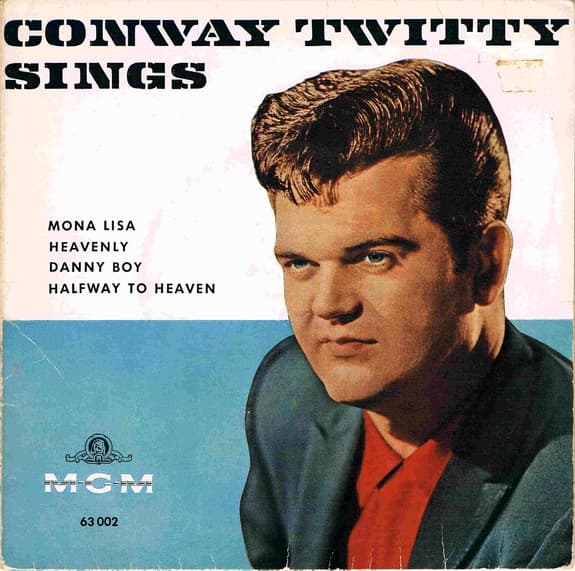
A portrait of longing recast in the glow of late fifties pop craftsmanship
When Conway Twitty released his interpretation of Mona Lisa in 1959, he carried the song into a new era of popular music. Originally known through Nat King Cole’s landmark 1950 recording, Twitty’s version arrived at a moment when he was rapidly ascending the charts and defining himself as one of the most versatile young vocalists of the period. The single reached the Billboard Hot 100 and secured significant success in the United Kingdom, where it rose into the Top 5. It would later appear on his early self-titled recordings, each one positioning him as an artist unafraid to match emotional subtlety with contemporary sonic energy. This combination of historic material and youthful intensity allowed the song to find a new audience that resonated with Twitty’s distinctive timbre and interpretive nuance.
The story behind Twitty’s Mona Lisa is grounded not in folklore or dramatic backstory but in the alchemy that occurs when a timeless melody meets a singer capable of reframing its emotional center. Rather than imitating Cole’s velvet restraint, Twitty reshaped the song through his own sensibilities. His phrasing lingers with a slightly aching quality, giving the lyric an undercurrent of romantic vulnerability. The arrangement, driven by the clean rhythmic pulse and bright studio textures characteristic of late fifties pop, supports his voice in a way that feels both modern for its time and deeply reverent toward the song’s origins.
At its core, Mona Lisa is a meditation on the unknowable interior world of another person. The lyric speaks to the mystique of a smile that reveals nothing and suggests everything, a metaphor that has echoed through decades of popular music. Twitty leans into that ambiguity. His delivery captures the tension between admiration and confusion, between the desire to understand and the recognition that true understanding may never come. He treats the central question not as an accusation but as a gentle inquiry, shaping the melody like someone tracing the contours of a memory.
Musically, the recording stands as an early example of Twitty’s gift for interpreting songs with emotional intelligence. Long before he became one of country music’s most beloved voices, he demonstrated a capacity to move fluidly across genres while retaining a core sincerity. His Mona Lisa feels transitional, a quiet hinge between the pop sounds of the late fifties and the deeper, more narrative-driven work that would define his later career.
The cultural legacy of Twitty’s rendition rests in its ability to preserve a classic while allowing it to breathe anew. It shows how a song can be passed from one era to the next without losing its essential mystery.