
A descent into myth, power, and the darker corners of glam rock’s imagination
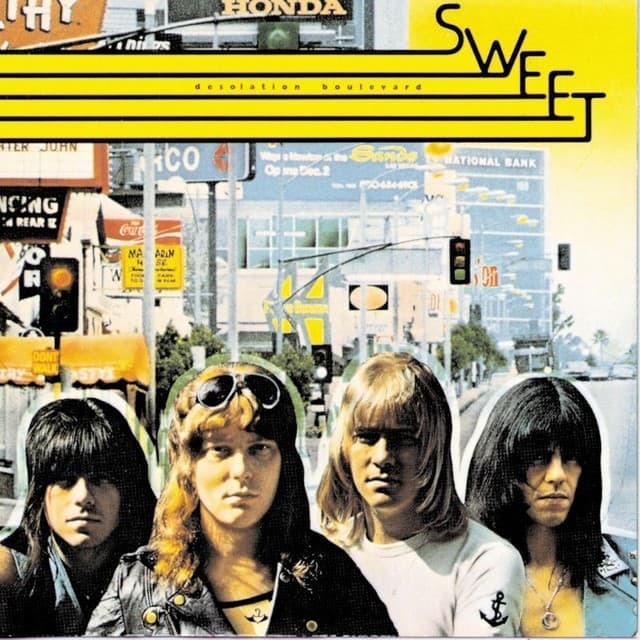
In the long arc of 1970s rock, Sweet carved a singular place for themselves, moving from radio-polished glam anthems into heavier, more ambitious territory. Medussa, appearing as one of the group’s deeper and more enigmatic recordings, stands outside the commercial spotlight that defined many of their chart successes, yet it occupies a compelling niche within the band’s evolution. While it did not chart as their major singles did, its placement within their catalog reveals a band pushing past the glitter of their early identity and stepping into a sound that carried more weight, more danger, and more narrative ambition. Often connected with the exploratory period surrounding albums like Sweet Fanny Adams and Desolation Boulevard, the song demonstrates how Sweet, even beyond their hits, were capable of immersive and atmospheric storytelling.
What makes Medussa so arresting is the way it channels the ancient myth not as a literal retelling but as a thematic framework. The track uses the Medusa figure as a metaphor for seduction, entrapment, and the dangerous allure of beauty. Sweet understood that myth has power because it speaks to the deepest and most primitive layers of the human psyche. Here, that mythic energy is transmuted into music. The guitars feel tense and coiled, the rhythms heavy yet deliberate, and the vocals delivered with a mix of warning and fascination. There is no reliance on shock. Instead, the band constructs a slow, consuming atmosphere that mirrors the gaze of the creature the song invokes.
Listening closely, one hears how the arrangement supports the psychological drama. The opening motifs create a sense of distance, as if the listener is approaching something forbidden. As the song progresses, the instrumentation grows denser, almost claustrophobic, illustrating the tightening grasp of the narrative. Sweet were never merely a singles act. Beneath the glitter, they possessed a remarkable sensitivity to tone, structure, and emotional resonance, and Medussa demonstrates this with clarity. There is sophistication in the way the band balances menace and melancholy, beauty and terror, movement and stasis.
The lyrical ideas reinforce this tension. Rather than presenting Medusa as a monster, the song engages with the sorrow, isolation, and misunderstood tragedy that accompany her myth. This interpretive shift lends the piece a haunting quality. Sweet seem to ask the listener to consider how myth turns people into symbols, how fear disguises vulnerability, and how legends survive because they speak to our own inner conflicts. Medussa becomes a meditation on transformation, both self inflicted and imposed by the world.
In this way, the song endures not because of chart numbers or wide commercial reach, but because it captures a band at a moment of artistic curiosity. It invites listeners into a darker, more contemplative corner of Sweet’s catalog, rewarding those willing to move past the familiar shine and encounter the shadows behind it.