
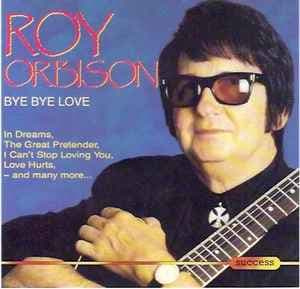
A Haunting Valediction to Lost Love
When Roy Orbison delivers “Bye Bye Love”, the words feel less like a farewell and more like a heartbreak rendered in slow motion.
Though the song was originally written by Felice and Boudleaux Bryant and made famous by The Everly Brothers in 1957 — reaching No. 2 on the U.S. Billboard Pop chart and No. 1 on other charts. Orbison’s version appears on his second studio album, Lonely and Blue, released in January 1961 under Monument Records.
Roy Orbison chose “Bye Bye Love” not just as a cover, but as an intimate reflection on loneliness — a subject he would explore throughout his career. Where The Everly Brothers’ original offers a springboard for its youthful longing, Orbison’s rendition transforms the song into something darker, more elegiac. On Lonely and Blue, he places his soaring, operatic vocals against a backdrop of subtle strings and somber accompaniment. The contrast between the bright, brisk rhythm of the melody and the tragic resignation of the lyrics becomes all the more striking in his hands.
Lyrically, “Bye Bye Love” is deceptively simple: the narrator bids farewell to love, happiness, and a lost romance, greeting instead “loneliness” and “emptiness” that feel impossibly heavy. > “Bye-bye love, bye-bye happiness / Hello loneliness I think I’m gonna cry” The heartbreak suggested here is not sudden or explosive; it’s settled, as if the pain has become a constant companion.
Orbison’s interpretation leans into that resignation. His voice — mournful yet controlled — imbues every line with a sense of enduring sorrow, rather than youthful frustration. The emotional weight he brings to the track suggests a man who knows loss intimately, and he turns the song into a quiet testament to the ache of unrequited or abandoned love.
Musically, the production in Lonely and Blue reflects this transformation. While the Everly Brothers relied heavily on acoustic guitars and their trademark harmony, Orbison’s version is more spacious, more atmospheric, offering room for his voice to resonate, to hover, almost as if suspended in memory. That sense of suspension — between what was and what might have been — is at the heart of his performance.
From a broader perspective, Orbison covering “Bye Bye Love” highlights the influence that the Everly Brothers and the songwriting team of the Bryants had on his artistry. He was not simply paying homage: he was internalizing their work, reworking it through his own sensibility, and folding it into his narrative of longing. By doing so, Orbison reinforced his identity as a singer who could take a familiar song and reveal its hidden depths, turning pop into something almost operatic.
In the context of his career, this version of “Bye Bye Love” resonates with a recurring theme in Orbison’s catalog: the soul in solitude. It is not a defiant goodbye. Rather, it is careful, reflective, and weighted — as though the singer has lived through the farewell, and now resides permanently in the silence that follows.
Ultimately, Roy Orbison’s “Bye Bye Love” is more than a cover: it is a meditation on loneliness, a tribute to heartbreak, and a showcase of his singular ability to blend vulnerability with vocal transcendence.