
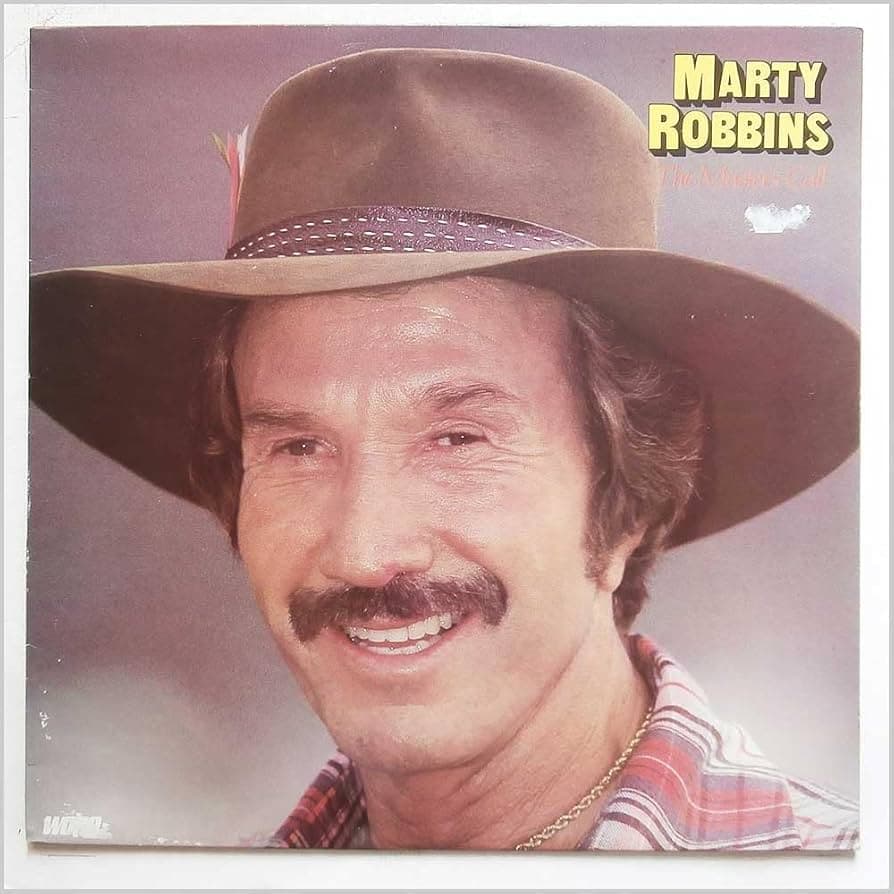
A Quiet Return to the Cowboy’s Heart, Haunted by Love and Pride
“All Around Cowboy” is a late-career Marty Robbins song that returns him to his western storytelling roots, recorded in 1979 and serving as the title track of his All Around Cowboy album. Although this single did not reach the summit of his earlier chart-toppers, it nevertheless landed on the charts as part of Robbins’s enduring legacy.
Marty Robbins, by 1979, was already a legend in country and western music—and he brings a seasoned, reflective voice to “All Around Cowboy.” The song appears on the All Around Cowboy album, which is widely acknowledged as Robbins’s final major Western-themed project. The production was handled with care, and it feels less like a grand, cinematic gesture and more like a gentle, honest stroll back down a dusty trail.
In the heart of this song, Robbins sketches a portrait of a man who’s built his identity around being “the all-around cowboy”—a rodeo champion, a rugged rider, proud of his skill, his independence, and his quiet strength. The opening lines set him firmly on top: “Well, all around cowboy, I’ve won it six years in a row … all around cowboy means champ of the big rodeo.” He’s made good money, savoring the freedom that comes with mastery and resilience. And yet, that identity—a symbol of competence and unshakable pride—fractures under the spell of love.
The narrative turns when a “rodeo queen,” a blonde filly “with blue eyes,” rides into his life. Robbins sings with a mix of wonder and betrayal, revealing how even the most self-reliant cowboy can fall “head over heels.” His strength becomes vulnerability. He was the man who bragged he’d “never be branded or broke,” yet in her presence, he’s exposed, transformed — “look like an all around fool.” The power dynamic shifts: she is no passive observer. She “rode me and raked me with spurs that left such a hurt … she left me broken and … cryin’ / out there in the rodeo dirt.”
Musically and thematically, “All Around Cowboy” does not aim for bombast. The arrangement is understated, letting Robbins’s voice carry the weight of regret and longing. According to critics, the album leans into lush but gentle textures—echoing acoustic guitars, soft background vocals, and even hints of mariachi-style horns to nod to his signature cowboy ballad traditions. That restrained sound reinforces the song’s intimacy: this is not a showy western epic, but a deeply personal confession.
In the context of Robbins’s vast catalog—filled with gunfights, outlaw ballads, and sweeping desert landscapes—this song feels quietly mature. Rather than dramatize, he reflects. Instead of mythologizing, he mourns a simple, painful truth: pride doesn’t armor a man against heartbreak.
Culturally, “All Around Cowboy” holds a special place. It’s been described as the last major western-themed moment of Robbins’s career, a kind of elegy to the cowboy mythos he helped define. Listeners who know Robbins from Gunfighter Ballads and Trail Songs—his 1959 masterpiece—hear in this later work not a return to form, but a knowing farewell.
Above all, the song resonates because it’s not just about the cowboy life, but about what lies beneath it: the fragile human heart. Robbins’s voice, seasoned by years in the saddle, carries both the grit of the trail and the ache of a man whose pride was his strength—and ultimately, his undoing.