
A HEART RECOGNIZED AT LAST WITH ALL ITS FLAWS
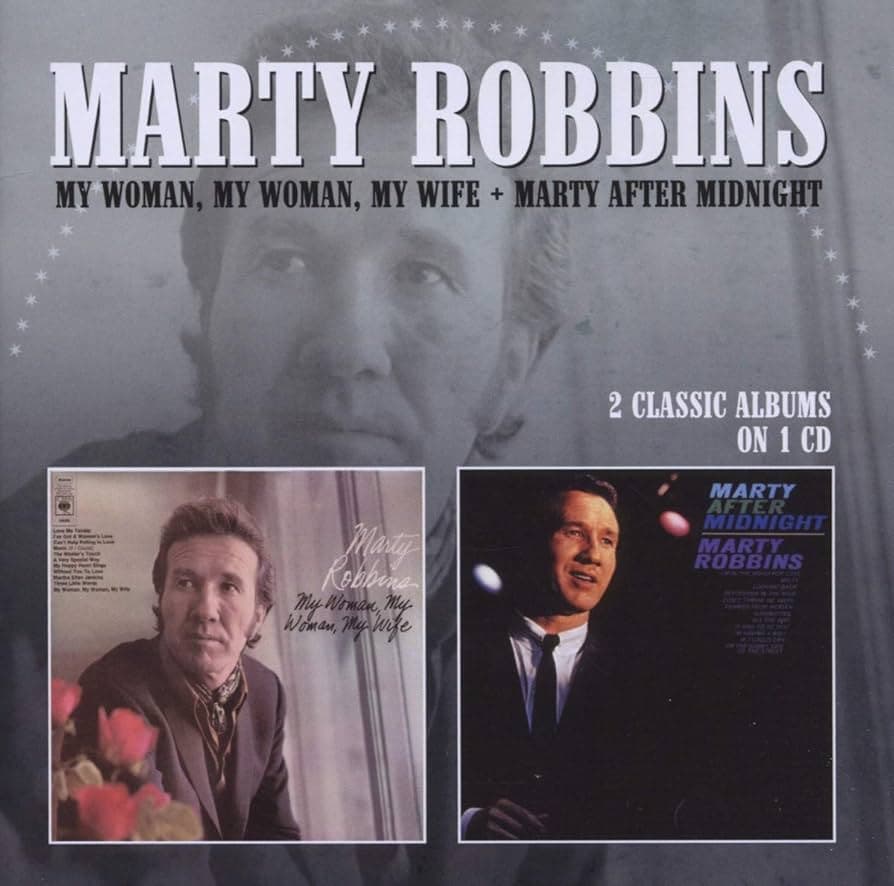
When “IT HAD TO BE YOU” by Marty Robbins slips into the speakers, one senses a gentle surrender to love’s quiet inevitability. The track appeared on his 1962 album “Marty After Midnight,” a collection of intimate standards and pop‑leaning ballads that showcased a different facet of Robbins’s artistry.
Though “It Had to Be You” was not issued as a major chart‑topping single, its presence on Marty After Midnight marks a deliberate shift by Robbins away from the rugged western ballads and honky‑tonk anthems that had defined so much of his success. In that sense the song stands as a personal statement—an embrace of vulnerability and lyrical tenderness from a man more often associated with gunfighters, heartbreak, and wide‑open plains.
Much of what makes this reading of “It Had to Be You” resonate lies in the understated sincerity of Robbins’s delivery. The lyrics—originally from the Tin Pan Alley standard by Isham Jones and Gus Kahn—speak to a love that transcends perfection. “With all your faults I love you still,” Robbins sings. There is no attempt to cloak pain in grand gestures or dramatic metaphors; instead, the song finds its power in acceptance, longing, and the simple truth of two souls drawn together against the odds.
Musically, Robbins and his accompanists craft a mood of late‑night intimacy. The gentle swing, subtle steel guitar inflections, and Robbins’s warm baritone form a soundscape evocative of a dimly lit club or a hushed parlor. It is music meant for close listening, for soft confession, for quiet reflection. In contrast to the sweeping narratives of western ballads, this song offers no story of heroism or tragedy—only the steady, honest arc of affection.
In the broader arc of Robbins’s career, “It Had to Be You” highlights his exceptional versatility. Known primarily as a country‑western legend who tallied 94 charted country singles and 16 number‑ones under his belt, Robbins never confined himself to a single mode. In Marty After Midnight, he turned toward a softer, more universal idiom—pop standards and torch songs—demonstrating that his voice could carry longing as convincingly as it could carry the sorrow of a desert night or the ring of a six‑gun.
In the decades since its release, this interpretation of “It Had to Be You” may not have carried the commercial weight of his biggest hits. But it remains a testament to Robbins’s emotional range—proof that behind the western swagger and chart success lay an artist capable of intimate confession. When the final note fades, what remains is a quiet truth: sometimes love does not demand perfection. It demands fidelity. It demands surrender. And if it must have been someone, then it had to be you.