
A defiant voice of country music standing unbroken against time’s relentless pull
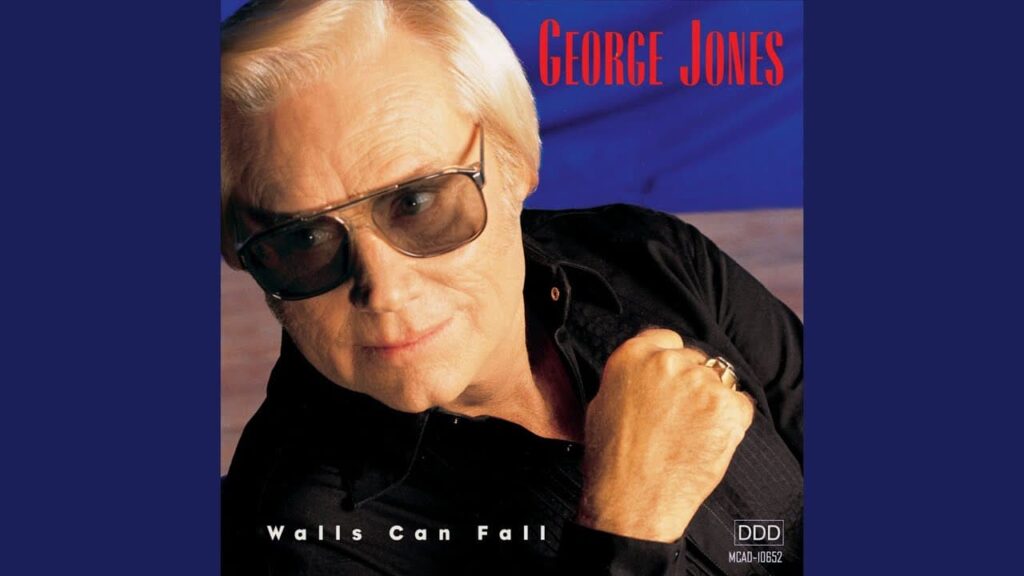
Released in 1992 as part of the album Walls Can Fall, George Jones issued I Don’t Need Your Rockin’ Chair as a bold late–career statement that resonated across the country landscape. The single reached the Top 40 on the Billboard Hot Country Singles chart, an impressive showing for an artist more than three decades into his recording life. Yet chart placement, while notable, is only the surface of what this record meant. Its release signaled a renewed surge of vitality for Jones and reinforced his enduring authority within a genre he had already shaped for generations.
The song occupies a singular position in the Jones canon because it serves as both manifesto and mirror. Rather than recount a specific anecdote or biographical event, its power arises from the way it transforms a universal truth into a personal declaration. I Don’t Need Your Rockin’ Chair stands as a musical rebuttal to the idea that age must silence the artist or reduce the performer to a relic. Jones does not merely reject the chair. He refuses the assumption hidden behind it. The voice that had carried heartbreak, devotion, regret and revelation for decades now turned deliberately toward defiance. The result is not an outburst but a proclamation shaped with the gravity of lived experience.
Lyrically, the song functions as a meditation on autonomy and resilience. Every line advances a portrait of a man who refuses to relinquish his connection to the vitality of performance. Jones delivers the message through phrasing that feels almost conversational yet bears the weight of an earned legacy. The timbre of his voice, softened slightly by time but sharpened by insight, conveys strength without bravado. His delivery suggests that survival in country music is never about maintaining youthfulness but about maintaining truth.
Musically, the track draws on a classic honky tonk foundation, but it also reveals the collaborative energy that surrounded Jones in the early 1990s. Guest vocalists and prominent Nashville players join in, creating an atmosphere of communal affirmation. The arrangement supports Jones rather than overshadows him. Its rhythmic steadiness and bright instrumentation frame his voice as the living heart of the performance.
The cultural impact of I Don’t Need Your Rockin’ Chair endures because it articulates something rare in popular music: the dignity of aging without surrender. It presents an artist asserting his relevance not through nostalgia but through presence. The song does not look backward. It stands firmly in the moment, reminding listeners that George Jones was still capable of singing with absolute conviction. In doing so, it became both a declaration of independence and a timeless affirmation of the power of country music’s most authentic voices.