
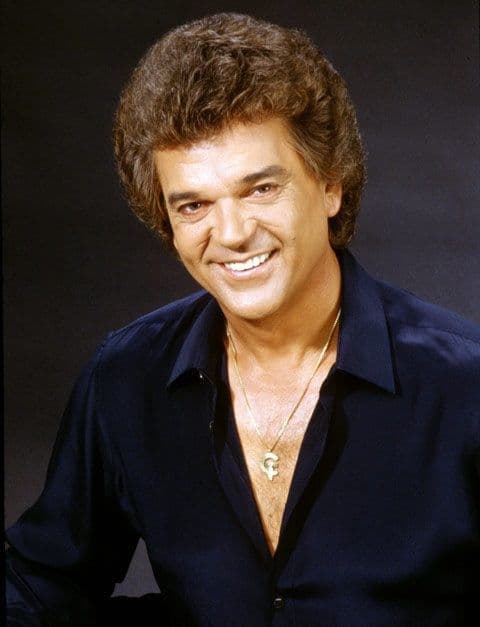
THE PAIN OF LOVING SOMEONE IN MEMORIES
In this haunting ballad, “I Love You More in Memory” by Conway Twitty draws its power from longing and loss transformed into a love that exists only in memory.
That weight of memory sharpens with every note and syllable, though the song never became one of his chart-topping singles — it instead slipped quietly into the depths of his 1973 album You’ve Never Been This Far Before / Baby’s Gone. The track remains one of those quietly profound moments in Twitty’s catalog, overlooked by the charts but unforgettable to those who feel the shadow of absent love.
The song was written by L. E. White, a frequent collaborator in Twitty’s late-60s and early-70s period. Though no contemporary Billboard chart placement is credited to “I Love You More in Memory,” its placement on the 1973 album situates it during a period when Twitty was shifting in tone — from the polished “Nashville sound” hits of the 1960s to a deeper, rougher emotional terrain in the 1970s.
In “I Love You More in Memory,” the heart does not whisper of blooming romance. Instead it mourns what once was, or what could never be reclaimed. The voice of the narrator addresses a love lost or left behind with quiet resignation — not bitterness, but a resigned devotion. He does not promise tomorrow; he promises that yesterday will endure. The lyrics suggest that every tender act, every shared moment, lives now only in recollection. Love becomes a ghost presence in the memory of time gone by.
Musically, Twitty’s delivery is stripped down and haunted. There is an economy of instrumentation that leaves space for the voice to linger on regret. The steel guitar and steady rhythm evoke a loneliness that does not demand tears but commands silence. In that quiet, the memory of love is given weight.
In the larger arc of Twitty’s career, “I Love You More in Memory” occupies a liminal zone — not a hit single, not a well-known showpiece, but a secret page in a book of heartbreak and longing. It speaks to a different kind of legacy. Instead of the crowd’s cheers or the radio’s repeated plays, it offers solace to those who listen alone late at night. It reminds us that not all love songs are meant to top the charts; some are meant to settle gently into the listener’s soul, to echo long after the record stops spinning.
That is the quiet power of “I Love You More in Memory.” It does not demand attention. It asks only to be remembered.