
A Silent Plea for Love and Belonging
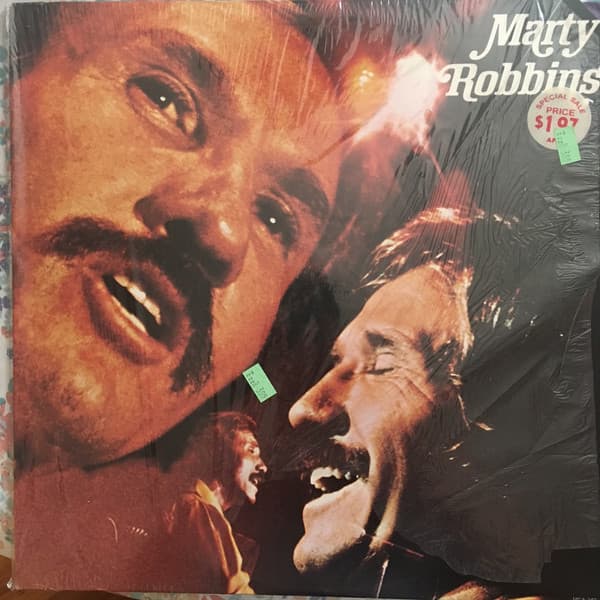
When Love Me by Marty Robbins begins, it is not a cowboy tale or a western ballad—it is a bare-hearted confession carved from longing and fear of loss.
When Robbins released Love Me in 1973, the song charted respectably on the US country charts, reaching the Top 10. The record was issued as a single, written by Jeanne Pruett, and became one of the most notable non-western style tracks in Robbins’s later career.
In the larger arc of Robbins’s catalog—dominated by epic western narratives and larger-than-life characters—Love Me stands as an intimate detour. Here, Robbins sets aside the desert dust and gunfighter code, trading them for the raw vulnerability of a heart asking for love. The lyrics are simple, with repetitive pleas: “Love me, oh love me like nobody else can do… Let me go on needing you.” But simplicity belies depth. Behind those repeated lines lies a man standing at the crossroads of hope and despair, aware that tomorrow might strip away everything—and so he clings, desperately, to someone’s heart.
Robbins’s vocal delivery brings a lifetime of lived experience to the song. He does not shout or embellish; instead, he inhabits the vulnerability. The timbre of his voice, seasoned by decades of heartbreak, travel, triumphs and losses, transforms the plea from lyric to living truth. The melody and arrangement are unadorned, allowing the emotional weight of the words to carry through. In a career built on dramatic gunfights, dusty trails and sweeping destinies, Love Me feels like a quiet confessional in the dead of night. It is a rare moment when Robbins shows that love need not be dramatic to be profound.
Because the song was written by Jeanne Pruett—herself a gifted storyteller and songwriter—the narrative voice remains female in origin even as Robbins gives it a male heart. That interplay adds a subtle layer: a meeting of two emotional universes, filtered through Robbins’s rugged sincerity.
Over the decades, Love Me has become something of a hidden jewel in Robbins’s catalog. It does not carry the mythic status of El Paso or the western grandeur of his trail songs. Instead it belongs to a different kind of legacy: the legacy of intimate truth, of the universal fear that love might slip away, of the quiet desperation that can only be voiced in a soft, trembling plea. For listeners approaching Robbins not as the cowboy balladeer but as the human being behind the voice, this song offers a glimpse of tenderness, fragility, and unguarded longing rarely seen in his better-known repertoire.
In the end, Love Me endures not because of chart positions or western imagery—but because it speaks to something universal. It reminds us that beneath every legend can be a longing heart, and that sometimes the most powerful stories are not about heroics, but about vulnerability and the need to be loved.