
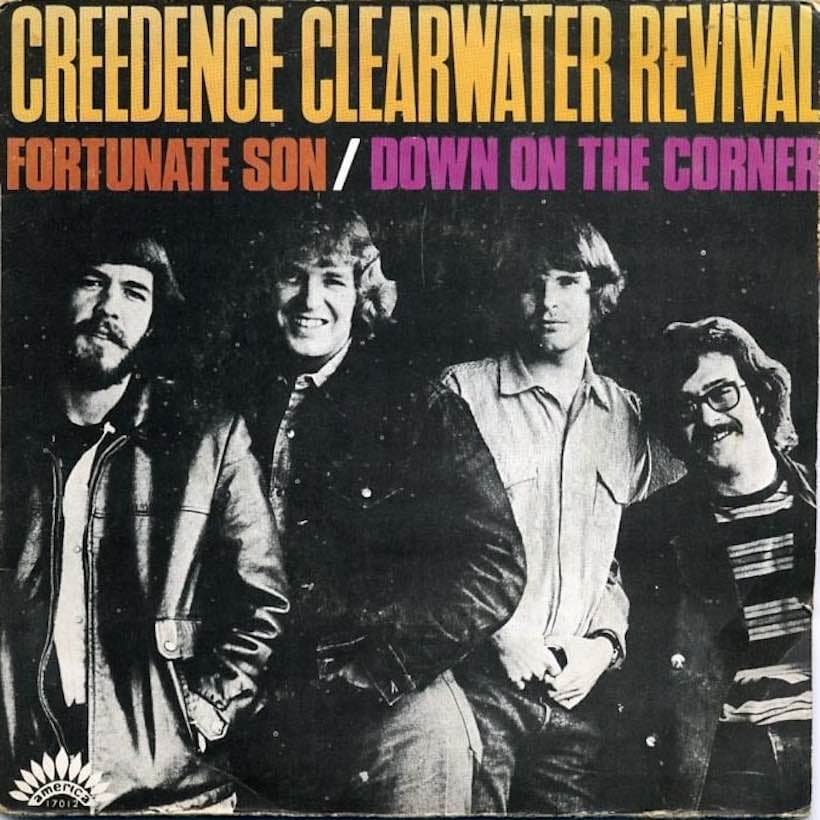
Blistering indictment of inherited privilege and the quiet fury of a generation sent to fight someone else’s war
Released in 1969, Fortunate Son by Creedence Clearwater Revival surged to number 14 on the Billboard Hot 100, a remarkable showing for a song so openly confrontational in its message. It appeared on the album Willy and the Poor Boys, a record that cemented the band’s reputation for pairing lean, roots driven rock with sharp social observation. At a time when much popular music spoke in metaphors or retreated into abstraction, Creedence Clearwater Revival chose directness, and Fortunate Son arrived like a raised voice in a room that had grown too polite about injustice.
At its core, the song is a protest, but not in the abstract sense of slogans or crowd chants. Written by John Fogerty, Fortunate Son takes aim at the class divide that shaped the American experience during the Vietnam War era. Its opening lines immediately establish the target. This is not a condemnation of patriotism itself, but of a system where the sons of wealth and political power often found ways to avoid the sacrifices demanded of everyone else. The bitterness in the lyric is not theatrical. It feels earned, observational, and deeply personal, even without explicit autobiography.
Musically, the song is built for urgency. The clipped guitar riff, the relentless rhythm section, and Fogerty’s raw vocal delivery create a sense of forward motion that never relaxes. There is no ornamental excess here. The arrangement mirrors the message. It is tight, insistent, and stripped of comfort. Every element serves the same purpose, to provoke, to expose, and to refuse complacency. The brevity of the track only intensifies its impact, making it feel less like a performance and more like a declaration.
What gives Fortunate Son its lasting power is its clarity. The song does not disguise its anger behind poetic ambiguity. Instead, it names the imbalance directly, contrasting public displays of loyalty with private exemptions from consequence. In doing so, it captures a moral outrage that resonated far beyond its moment of release. While rooted in the Vietnam era, its critique of privilege, hypocrisy, and unequal burden remains unsettlingly relevant. Each generation seems to rediscover the song not as a relic, but as a mirror.
Culturally, Fortunate Son has taken on a second life through its frequent use in film and television, often accompanying scenes that depict the machinery of war or the arrogance of power. While some of these uses risk reducing the song to shorthand, they also testify to its unmistakable identity. A few opening notes are enough to summon an entire emotional landscape of skepticism, resistance, and moral clarity.
Within the catalog of Creedence Clearwater Revival, Fortunate Son stands as one of their most uncompromising statements. It does not seek reconciliation or comfort. It offers no easy resolution. Instead, it preserves a moment when popular music dared to confront authority without irony or detachment. For listeners who return to it decades later, the song still carries the weight of its original intent, reminding us that some truths, once sung plainly, refuse to fade with time.