
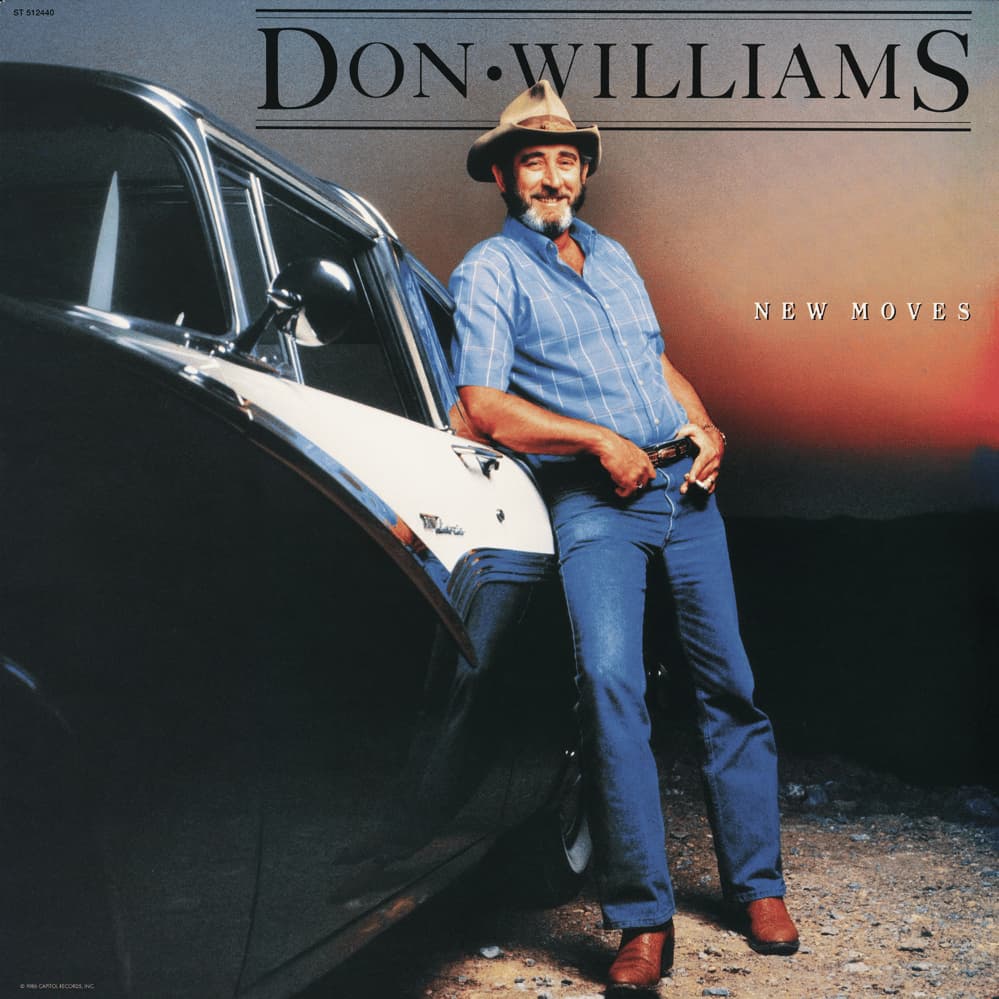
Quiet vow of emotional withdrawal, where love is remembered not with bitterness, but with weary, irreversible clarity.
Upon its release in 1977, I’ll Never Be In Love Again became one of Don Williams’ most quietly resonant hits, rising to the Top Five on the Billboard Hot Country Singles chart and securing its place on the album Visions, a record that further solidified Williams as one of country music’s most trusted emotional narrators. While it did not reach the chart summit, its staying power proved more telling than peak position. The song arrived during a period when Williams was refining a signature style built not on drama or bravado, but on understatement, restraint, and emotional credibility.
What distinguishes I’ll Never Be In Love Again is its refusal to perform heartbreak theatrically. The song does not plead, accuse, or attempt reconciliation. Instead, it unfolds like a private conclusion reached long before the listener arrives. From the opening lines, the narrator speaks with the calm certainty of someone who has already exhausted hope. This is not the pain of fresh loss, but the deeper ache that follows acceptance, when emotion has settled into something colder and more permanent.
Lyrically, the song operates on finality. There is no suggestion that love has failed temporarily or that healing might reopen the door. The declaration is absolute. Yet Williams delivers it without bitterness. His voice, famously even tempered and unforced, gives the words their authority. He does not sound wounded. He sounds resolved. That distinction is crucial. In the world of classic country, where heartbreak often erupts into regret or self destruction, this song instead portrays emotional withdrawal as an act of survival.
Musically, the arrangement mirrors that restraint. The production on Visions favors clarity over embellishment, allowing Williams’ baritone to sit front and center. Gentle instrumentation supports rather than competes, creating space for silence between phrases. Those pauses matter. They suggest the thoughts left unsaid, the memories already processed and filed away. The song breathes, and in doing so, it invites the listener into its stillness.
Culturally, I’ll Never Be In Love Again reflects a broader shift in country music during the late 1970s. As the genre moved away from the rowdy urgency of earlier decades, artists like Williams gave voice to quieter, more internal struggles. His appeal lay in his relatability. He sang not as a mythic figure, but as an ordinary man grappling with ordinary emotional truths. This song, in particular, resonates with listeners who recognize that some endings do not explode. They simply settle.
Over time, the track has endured because it respects the intelligence and emotional maturity of its audience. It does not tell the listener how to feel. It simply states a truth and allows its weight to land naturally. In the canon of Don Williams, I’ll Never Be In Love Again stands as one of his most honest statements, not because it is dramatic, but because it is believable. It understands that sometimes the most devastating declarations are spoken softly, once, and never revisited.