
Promise whispered too late, when love has already begun to turn into farewell.
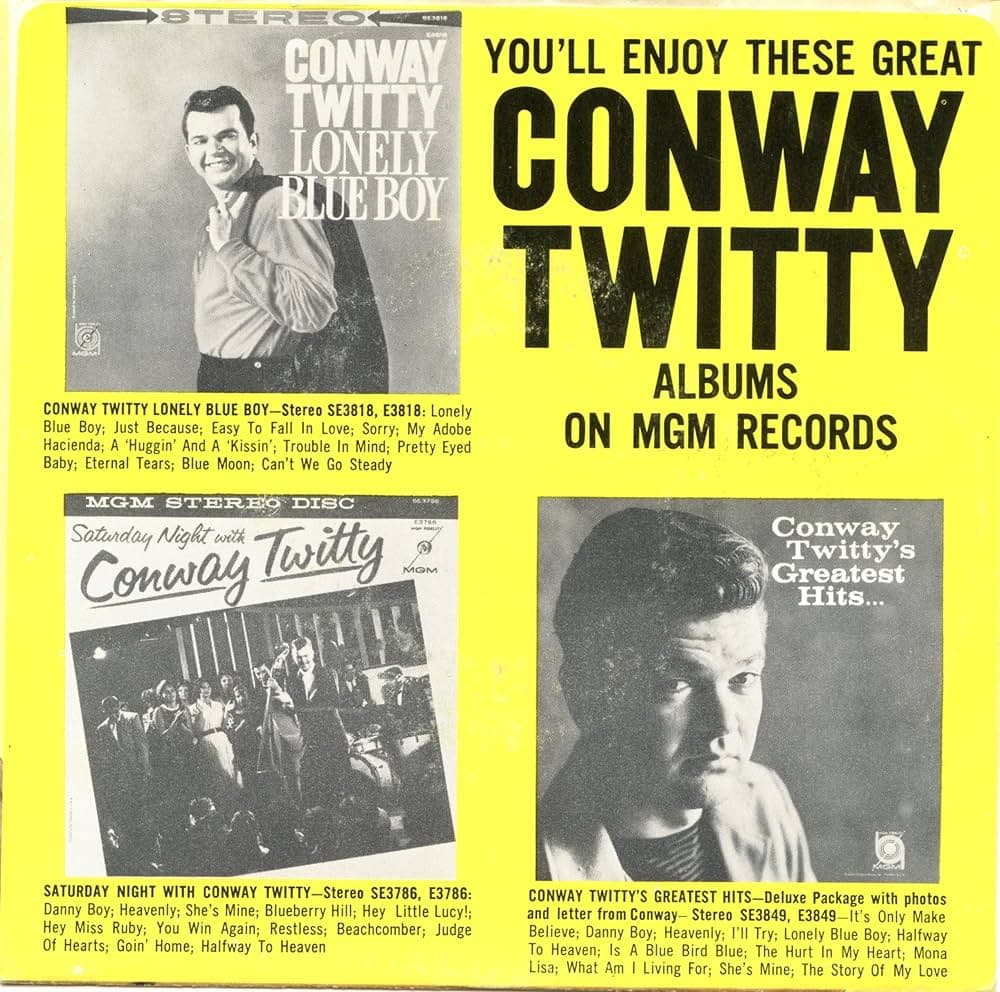
When Conway Twitty released The Next Kiss (Is the Last Goodbye) during his early 1960s country ascent, the song quickly made its presence felt on the country charts, confirming his growing authority as a vocalist who could inhabit heartbreak with unnerving sincerity. Issued as a single and later gathered onto Conway Twitty album collections from that period, the recording stands as a quiet but consequential entry in a catalog that was steadily redefining modern country music. It arrived at a moment when Twitty was fully transitioning from his rockabilly origins into the emotional precision of country storytelling, and audiences responded accordingly.
What makes The Next Kiss (Is the Last Goodbye) endure is not spectacle, but restraint. The song is built on an almost unbearable premise, the knowledge that intimacy has become terminal. The kiss, once a symbol of connection, is recast as a final punctuation mark. Twitty does not shout this revelation. He lets it surface gradually, as if the singer himself is only just realizing the truth while speaking it aloud. This is classic Conway Twitty territory, where emotional devastation is delivered not through melodrama, but through quiet recognition.
Lyrically, the song inhabits that fragile moment when denial collapses. There is no explosive argument, no betrayal laid bare. Instead, there is the soft certainty that something essential has already slipped away. This perspective was one of Twitty’s great gifts as an interpreter of songs. He understood that the most profound heartbreak often arrives without noise. His phrasing lingers, especially on the word goodbye, stretching it just enough to suggest reluctance, resignation, and a lingering hope that cannot quite die.
Musically, the arrangement serves the narrative with disciplined elegance. The instrumentation remains understated, allowing Twitty’s voice to occupy the emotional foreground. Subtle steel guitar lines hover like unanswered questions, while the steady rhythm keeps the song grounded in inevitability. Nothing rushes. Nothing intrudes. The listener is given space to sit with the discomfort of knowing what comes next, and that space is where the song does its deepest work.
Within Conway Twitty’s broader legacy, The Next Kiss (Is the Last Goodbye) represents a defining emotional posture rather than a career peak. It captures the era when he was mastering the art of emotional economy, learning how to say more by saying less. This approach would become a cornerstone of his later classics, where intimacy felt almost conversational, as if the singer were confiding in a single listener rather than performing for a crowd.
For those who return to this song decades later, its power has not diminished. If anything, it has grown. Age teaches us that endings rarely announce themselves with clarity. Often, they reveal their finality only in hindsight. The Next Kiss (Is the Last Goodbye) understands this truth with devastating grace, preserving it in vinyl grooves and memory alike. This is not merely a song about love ending. It is about the moment we realize it already has, and the quiet courage it takes to admit it.