
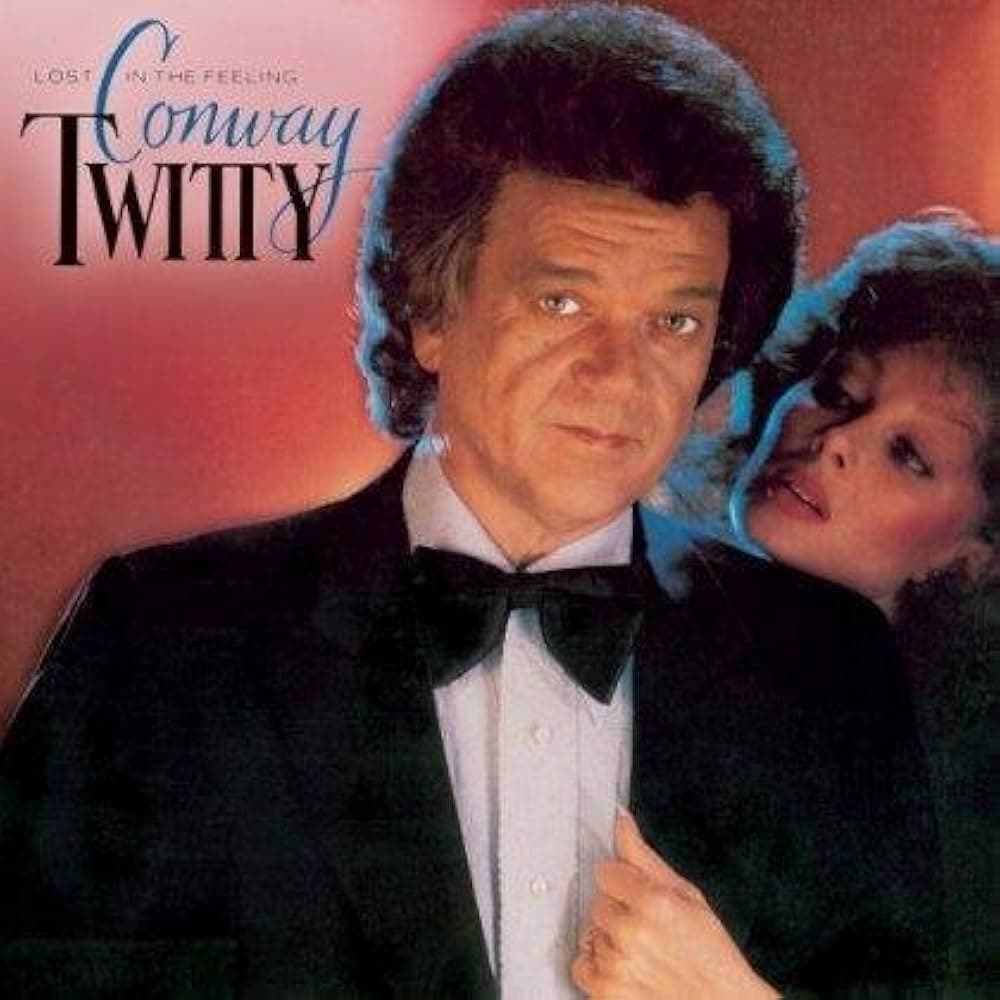
A confession whispered at closing time where desire outweighs reason and the heart willingly surrenders control
Released in 1983, Lost In The Feeling became yet another number one hit for Conway Twitty on the Billboard Hot Country Singles chart, anchoring itself as a defining moment on his album Southern Comfort. By this point in his career, Twitty was no longer chasing validation. He was refining a language of intimacy that few singers in American music had ever spoken so fluently, and this song stands as one of his most restrained yet devastating performances.
At its surface, Lost In The Feeling is a song about temptation. Beneath that surface, it is about recognition. The kind that happens too late to pretend innocence but too early to call it love. Twitty does not play the role of a reckless romantic here. Instead, he inhabits the voice of a man who understands exactly what line he is crossing and accepts the consequences before taking the step. That moral awareness is what gives the song its quiet gravity. There is no dramatic explosion, no melodramatic regret. The tension lives in the pause, in the hesitation before surrender, in the honesty of admitting that control has already slipped away.
Musically, the arrangement mirrors this emotional restraint. The production on Southern Comfort favors warmth over spectacle. Soft electric guitar phrases drift rather than dominate. The rhythm section holds steady, never pushing forward, as if respecting the internal struggle at the song’s core. This measured pacing allows Twitty’s voice to become the primary instrument of meaning. His delivery is intimate, almost conversational, yet shaped by decades of experience in both country and pop traditions. Every phrase lands with the weight of someone who has lived long enough to know the cost of desire and sings anyway.
What elevates Lost In The Feeling beyond a standard country ballad is its refusal to moralize. The song does not condemn the moment it describes, nor does it romanticize it into fantasy. Instead, it captures that suspended space where emotion overtakes intention. Twitty’s narrator is not lost in confusion. He is lost in clarity. He knows what the feeling is, where it leads, and why it is irresistible. That distinction is crucial. It transforms the song from a tale of weakness into a study of human vulnerability.
Culturally, this record arrived during a period when country music was increasingly polished, sometimes at the expense of emotional risk. Conway Twitty remained an exception. His success with Lost In The Feeling reaffirmed that adult themes, delivered with subtlety and emotional intelligence, still had a place at the top of the charts. It resonated not because it shocked, but because it recognized something listeners already knew and rarely said out loud.
Decades later, Lost In The Feeling endures because it speaks to moments we remember more vividly than entire relationships. Those brief encounters where everything feels inevitable. Where silence says more than promises. In the careful hands of Conway Twitty, that moment became timeless, preserved in vinyl grooves as a reminder that sometimes the most powerful stories are not about what we do, but about the instant we realize we are already undone.