
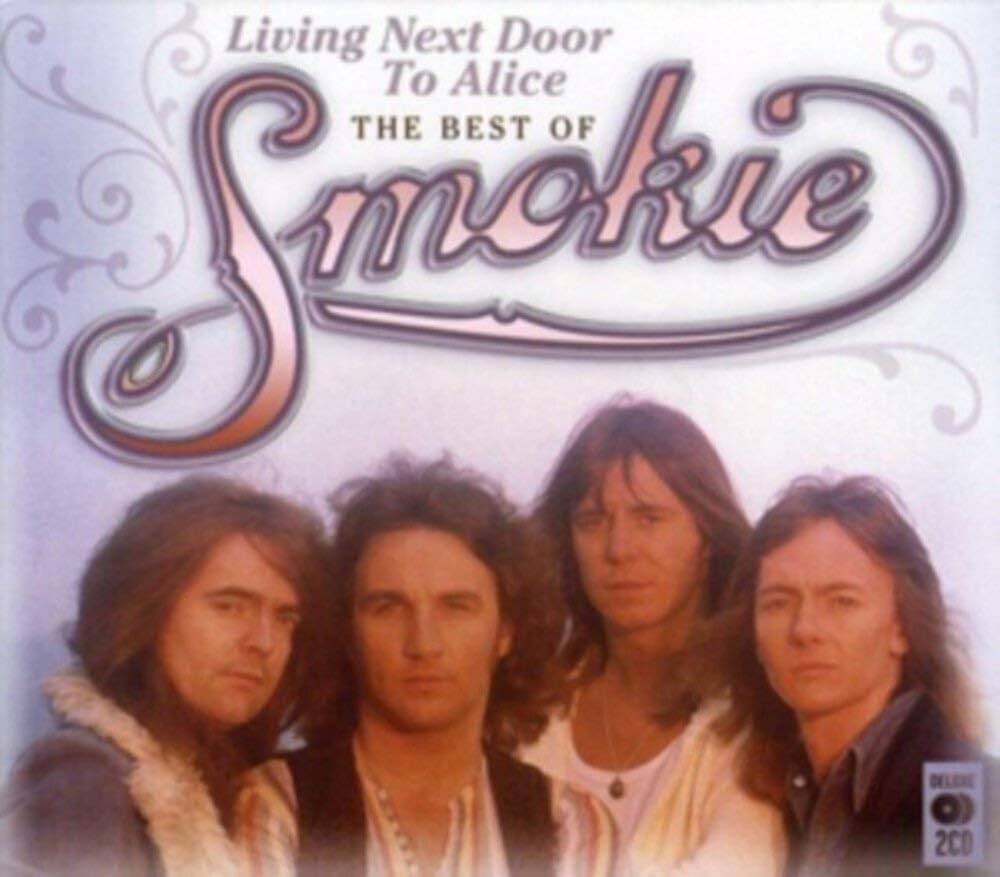
A quiet English street becomes a lifelong wound where ordinary memory learns how to ache
When Smokie released Living Next Door to Alice in nineteen seventy six, the song climbed into the upper tier of the UK singles chart, peaking at number five, and went on to reach the top position across much of continental Europe. It appeared on the album Midnight Café, a record that marked the band’s most confident synthesis of melodic rock and reflective storytelling. For a group often associated with warm harmonies and accessible hooks, this song stood apart as something deeper, a slow burning meditation on time, regret, and the small distances that shape entire lives.
At its surface, Living Next Door to Alice unfolds with almost disarming simplicity. A man watches a neighbor he has loved in silence for decades finally leave town. There is no dramatic confrontation, no confession at the train station, no cinematic climax. Instead, the song is built around restraint. The narrator tells us what he did not do, what he never said, and how those omissions have hardened into permanence. The street remains. The house remains. Only Alice is gone. In this minimalism lies the song’s enduring power.
Musically, Smokie frame the narrative with a gentle, steady progression that resists urgency. The tempo never rushes the listener toward resolution because there is none to reach. The melody circles back on itself, echoing the way memory does, revisiting the same moments with slightly altered emotional weight each time. Mike Chapman and Nicky Chinn’s production favors clarity over excess, allowing the vocal delivery to sit forward and conversational, as if the listener has been trusted with a private confession.
Lyrically, the song is not about romance fulfilled or even explicitly denied. It is about proximity mistaken for possibility. The narrator lives close enough to believe there will always be time. Years pass quietly. Children grow up. Life accumulates. The tragedy is not that Alice leaves, but that nothing ever forced a choice before it was too late. This is a song about emotional inertia, about how comfort can disguise fear, and how silence can feel safer than risk until silence becomes irreversible.
Culturally, Living Next Door to Alice has endured because it mirrors a universal human experience without spectacle. Many listeners recognize themselves not as heroes or villains, but as bystanders to their own emotional lives. The song does not moralize. It observes. It leaves space for the listener to supply their own Alice, their own street, their own long avoided conversation.
Within the context of Midnight Café, the track deepened Smokie’s reputation as chroniclers of everyday longing. While other songs chased romance or nostalgia with brighter colors, this one lingered in muted tones, trusting that maturity in songwriting meant knowing when not to speak too loudly. Decades later, Living Next Door to Alice still resonates because it understands a painful truth. Sometimes the greatest distances are measured not in miles, but in courage never summoned.