
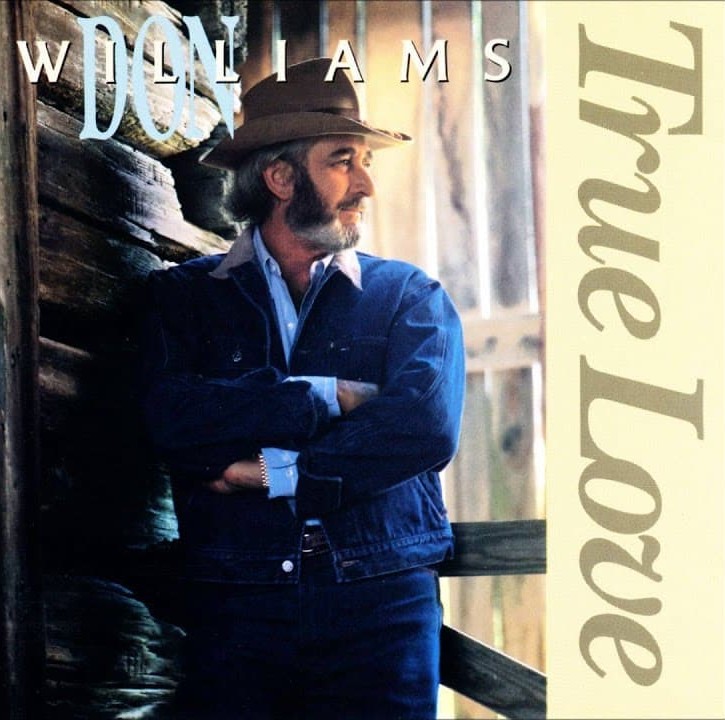
A quiet confession where restraint becomes the deepest form of devotion
Released as a single in 1974, Just ‘Cause I’m In Love With You became a defining early success for Don Williams, climbing to No. 3 on the Billboard Hot Country Singles chart and signaling the arrival of a voice that would soon reshape the emotional vocabulary of country music. The song appears on Volume One, the album that introduced Williams as a solo artist after his time with the Pozo Seco Singers, and it stands as one of the clearest statements of his artistic identity from the very beginning.
What distinguishes this song is not narrative drama or lyrical surprise, but its deliberate refusal of both. Just ‘Cause I’m In Love With You is built on understatement, a quality that would become Williams’ greatest strength. The lyric is disarmingly plain. There is no grand promise, no sweeping metaphor, no attempt to persuade or dazzle. Instead, the song speaks from a place of emotional humility. Love here is not a performance. It is a condition. The singer does not demand reciprocity, nor does he dramatize his longing. He simply states it, and in doing so, accepts the vulnerability that comes with such honesty.
Musically, the arrangement mirrors this emotional posture. The production is spare and unhurried, anchored by gentle acoustic textures and a steady rhythm that never calls attention to itself. This restraint allows Williams’ baritone to carry the full weight of the song. His voice does not reach. It settles. There is warmth, but also a quiet resignation, as though love is something he has learned to live with rather than conquer. This was a radical approach in a genre that often favored either heartbreak or bravado. Williams offered something else entirely. Emotional steadiness.
The song’s power lies in its emotional maturity. The narrator does not confuse love with entitlement. Loving someone does not grant him authority over their choices, nor does it guarantee fulfillment. This perspective resonated deeply with adult listeners who recognized the truth embedded in that restraint. Love, as Williams presents it, is often unreturned, unresolved, and ongoing. It exists without resolution, and that is precisely what makes it real.
Culturally, Just ‘Cause I’m In Love With You helped establish the template for what would later be called the Gentle Giant of country music. At a time when country radio was filled with louder personalities and sharper narratives, Williams offered a voice that trusted silence as much as sound. The song did not chase the listener. It waited. Decades later, it still does.
In retrospect, this recording feels less like a debut hit and more like a quiet manifesto. It announced an artist committed to emotional clarity, lyrical economy, and the belief that the softest truths often last the longest. Don Williams did not need to raise his voice to be heard. He simply told the truth, and let it echo.