
Master at the Piano Reveals How Vulnerability Can Command a Room
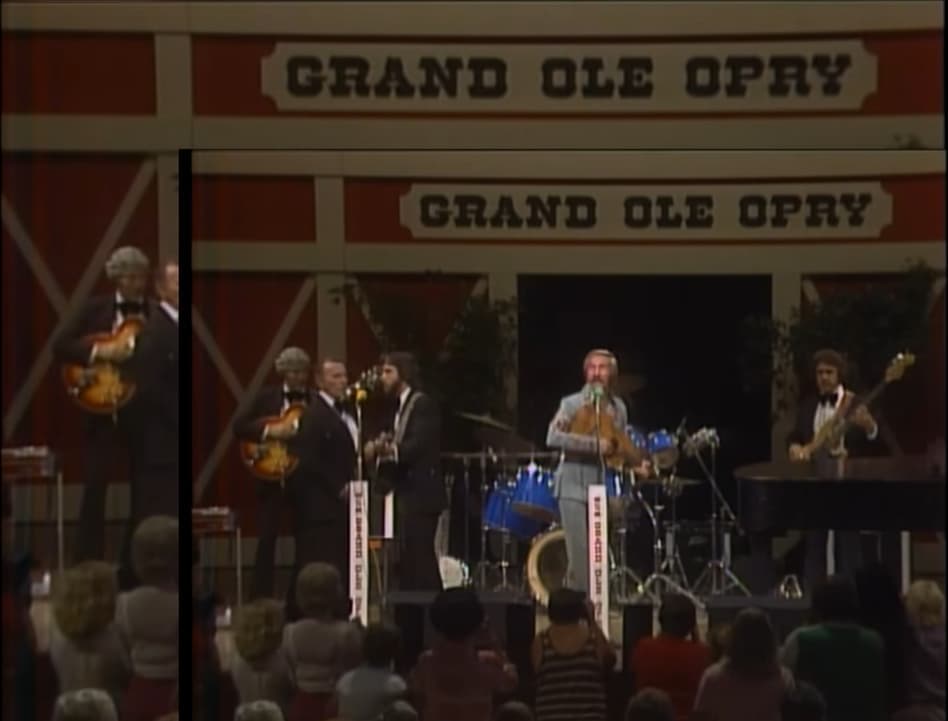
When Marty Robbins sat at the piano and sang Love Me on the Grand Ole Opry stage in 1981, he was reaching back to a song whose emotional authority had already been proven decades earlier. Love Me, written by Jerry Leiber and Mike Stoller, first achieved major commercial recognition in the 1950s and became a No. 2 hit on the Billboard pop chart through Elvis Presley. Robbins later made the song his own on his album Love Me, reaffirming its enduring appeal within the country tradition and situating it inside his long career as one of Nashville’s most expressive interpreters. By the time of that Opry performance, Robbins was not chasing charts. He was communing with history.
The moment matters because it strips away the familiar image of Robbins as the epic storyteller of gunfighters and desert ballads. At the piano, he offered no cinematic sweep, no narrative distance. Love Me is a plea, almost embarrassingly direct, and that is precisely why it works. The lyric does not posture or bargain. It asks, simply and repeatedly, to be chosen. In the hands of a lesser singer, such simplicity can feel exposed. In Robbins’ hands, it becomes dignified. His voice carried the calm assurance of someone who had lived long enough to understand that love, when it is real, does not need ornament.
Musically, the song’s slow tempo and restrained harmony leave enormous space between phrases. Robbins used that space with intention. Each pause felt considered, as if he were weighing whether the next line was worth the risk of saying out loud. This was a veteran artist trusting silence as much as sound. The piano, unadorned and steady, framed the performance like a confession spoken after midnight, when bravado finally loosens its grip.
By 1981, Robbins’ legacy was secure. He had conquered the charts in multiple eras, crossed stylistic boundaries, and earned his place at the Opry through consistency rather than spectacle. That context gives this performance its quiet power. Love Me is not presented as nostalgia or revival. It is treated as a living document, still capable of revealing something uncomfortable and true. Robbins did not reinterpret the song so much as inhabit it, allowing age and experience to deepen its meaning. What once sounded like youthful longing now carried the weight of someone who understood how fragile connection can be.
The cultural legacy of Love Me rests on its universality, but Robbins’ rendition reminds us that universality does not require volume. Sometimes it arrives seated at a piano, delivered by a man who has already said everything else there is to say. In that Opry performance, Marty Robbins demonstrated that vulnerability, when offered without apology, can hold an audience more firmly than any anthem. The record spins quietly, but it never stops asking to be heard.