
A quiet meditation on love that insists growth is born from patience, pain, and faith rather than easy bloom.
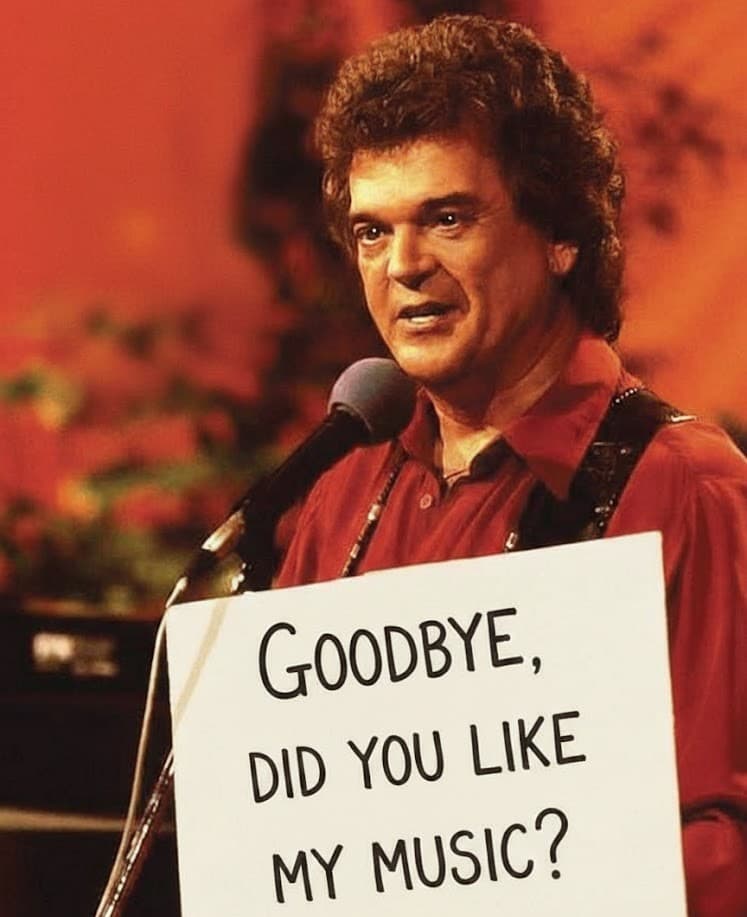
When Conway Twitty stepped onto the stage in 1992 to perform The Rose, he was revisiting a song that had already secured a formidable place in popular music history. Originally known for its strong chart presence upon release and its wide embrace across adult contemporary and pop audiences, The Rose had long since outgrown the confines of any single genre. Though this 1992 live performance was not tied to a specific studio release, and arrived years after the song first achieved commercial success, Twitty’s interpretation carried the accumulated weight of a career defined by emotional candor and narrative authority.
Written by Amanda McBroom and first brought to mass attention through earlier recordings, The Rose is built on an idea as old as songwriting itself, that love is misunderstood when judged only by its wounds. What makes Twitty’s live performance from 1992 so quietly devastating is how he reframes the song not as a ballad of consolation, but as a testimony delivered by someone who has lived through every line. By this point in his career, Conway Twitty had nothing left to prove to the charts. His voice, softened by time yet sharpened by experience, approaches the lyric less as poetry and more as confession.
The song’s central metaphor, love as a rose that grows from a seed beneath the winter snow, has often been described as simple. In Twitty’s hands, simplicity becomes gravity. Each phrase is allowed to breathe. He does not rush toward the hopeful conclusion. Instead, he lingers in the verses that describe fear, loss, and the instinct to protect oneself from pain. This pacing transforms the song into something closer to a sermon than a performance, one delivered without spectacle, relying entirely on restraint.
Musically, the live arrangement strips away any excess sentimentality. The accompaniment supports rather than leads, giving Twitty room to shape each syllable. His phrasing suggests a man who understands that love is not a promise of comfort, but a discipline. This reading resonates deeply with audiences who have followed his career through heartbreak anthems and redemptive narratives alike. By 1992, Conway Twitty had become a vessel for emotional truth rather than a mere interpreter of lyrics.
Culturally, The Rose endures because it refuses cynicism without denying suffering. Twitty’s performance underscores that balance. He does not argue against the listener’s pain. He acknowledges it, then offers patience as the only honest response. In this live moment, the song becomes less about romance and more about endurance. It speaks to anyone who has waited through emotional winters, uncertain whether anything would grow again.
In the long arc of Conway Twitty’s legacy, this performance stands as a reminder that great songs do not age, they deepen. The Rose, in 1992, blooms not as a hit revisited, but as wisdom finally spoken aloud.