
A serenade where devotion is spoken softly, as if love itself were a sacred vow carried on ocean air.
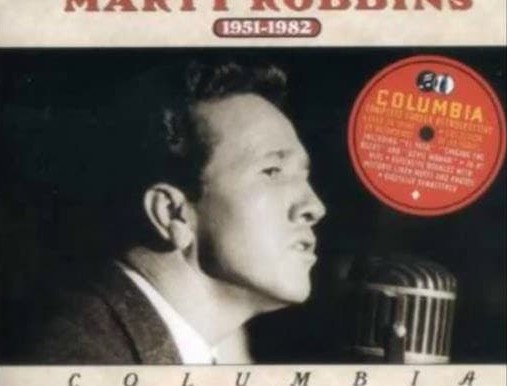
When Marty Robbins released his interpretation of The Hawaiian Wedding Song, it arrived not as a chart contender but as a statement of reverence. Unlike pop renditions that climbed the singles rankings, Robbins’ version did not register prominently on the major US pop charts upon release. Instead, it lived within the context of a Hawaiian themed album issued during his prolific late nineteen fifties period, a time when Marty Robbins was expanding his reach beyond country hits into carefully curated thematic records. This recording sat alongside his other explorations of romance, place, and tradition, reinforcing his reputation as a vocalist who treated songs as emotional landscapes rather than commercial vehicles.
The song itself, known traditionally as Ke Kali Nei Au, carries a lineage far older than the recording industry. Its origins are ceremonial, written as a declaration of eternal love and spiritual union. In Robbins’ hands, The Hawaiian Wedding Song becomes less about spectacle and more about intimacy. His baritone does not attempt to exoticize the material. Instead, he approaches it with restraint, allowing the melody to breathe and the vow at the heart of the lyric to unfold naturally. This is a man accustomed to singing of gunfighters, heartbreak, and moral consequence, now turning his voice toward tenderness without irony.
What distinguishes Robbins’ interpretation is his instinctive understanding of narrative, even in a song that is essentially a blessing. He phrases each line as though addressing a single listener, transforming a communal wedding chant into a personal promise. The orchestration remains gentle and respectful, supporting rather than overwhelming the vocal. There is no urgency here. Time seems suspended, as if the ceremony itself exists outside the pressures of modern life.
Lyrically, The Hawaiian Wedding Song speaks of love as continuity rather than climax. It does not dwell on passion or drama, but on endurance. Robbins’ calm delivery reinforces this philosophy. He does not sell the idea of love as conquest. He presents it as commitment, quiet and unshakeable. In an era when popular music was increasingly driven by youth, speed, and novelty, this approach felt almost defiant in its patience.
Culturally, Robbins’ recording stands as an example of mid century American artists engaging with traditional material through sincerity rather than reinvention. He does not attempt to modernize the song or bend it toward his country roots. Instead, he steps aside and allows the song’s dignity to remain intact. That choice speaks volumes about his artistic character.
Today, Marty Robbins is rightly celebrated for his chart topping hits and Western ballads, yet recordings like The Hawaiian Wedding Song reveal a deeper truth. He was an archivist of feeling, a singer who understood that some songs are not meant to be conquered by charts or trends. They are meant to be preserved, honored, and passed along, like vows spoken once but remembered forever.