
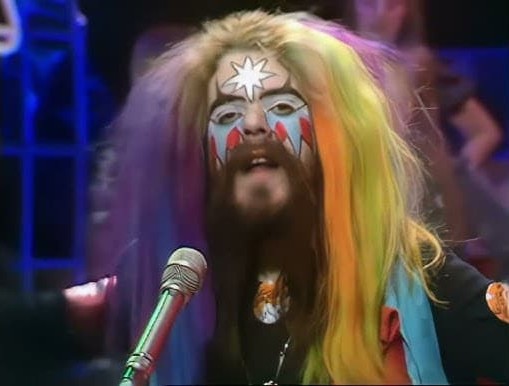
A joyous fantasy of young love captured as pure sound, spinning innocence and bravado into three unforgettable minutes.
Released in May 1973, “See My Baby Jive” became a defining moment for Wizzard, racing to number one on the UK Singles Chart and holding that position for four weeks during the height of the glam rock era. It later anchored the band’s debut album Wizzard Brew, a record that announced Roy Wood’s post Move ambitions with color, confidence, and a deep reverence for pop history. From its first crackle of handclaps and voices, the song felt less like a new release and more like a memory rediscovered, as if it had always existed somewhere in the grooves of British pop culture.
At its core, “See My Baby Jive” is a deliberate act of time travel. Roy Wood, already respected as a sophisticated songwriter and producer, strips everything back to the emotional basics. The song reaches toward the early 1960s, channeling the spirit of doo wop harmonies, Phil Spector style wall of sound exuberance, and teenage romance filtered through a glam rock lens. This is not nostalgia as melancholy. It is nostalgia as celebration. Wood does not mourn the past. He revives it, dresses it in glitter, and lets it dance again.
Lyrically, the song is almost disarmingly simple. There is no elaborate narrative or poetic abstraction. Instead, Wood leans into repetition and directness, mirroring the innocence of first love and the way it overwhelms language itself. The phrase “see my baby jive” becomes a mantra, less about literal movement and more about pride, possession, and awe. It is the sound of someone wanting the whole world to look at what makes his heart race. That simplicity is its genius. By refusing complexity, the song captures a truth about young love that sophisticated songwriting sometimes forgets. When emotion is that strong, words circle rather than explain.
Musically, the production is where the song earns its legacy. Layered vocals pile atop each other until they feel communal, almost anonymous, like a crowd chanting in approval. Handclaps and percussion propel the track forward with a physical urgency that demands movement. The melody is bright and circular, designed to lodge itself in the listener’s memory after a single spin. This is pop as architecture, carefully built to feel effortless.
Culturally, “See My Baby Jive” stands as a statement of intent from Wizzard and from Roy Wood himself. In an era when glam rock often leaned toward irony or theatrical provocation, this song chose sincerity. Its success proved that audiences still craved joy without cynicism, romance without disguise. Decades later, it endures not because it reinvented pop, but because it remembered why pop mattered in the first place.
For the vinyl minded listener, dropping the needle on “See My Baby Jive” is like opening a time capsule that never aged. It reminds us that sometimes the most lasting records are not the ones that shout their importance, but the ones that simply smile, clap their hands, and invite us to feel young again.