
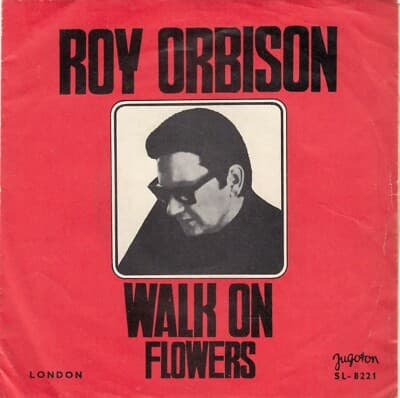
A Quiet Resolve and the Poignancy of Parting, Encapsulated in Two Minutes of Pure Heartbreak
Upon its release in mid-1968, “Walk On” by Roy Orbison carved a subtle but enduring presence into the British charts, peaking at number 39 and remaining on the UK Singles Chart for ten weeks. The song would later be included on Orbison’s thirteenth studio album Roy Orbison’s Many Moods, released in May 1969. Though not a blockbuster hit in the way of “Oh, Pretty Woman” or “Crying,” “Walk On” stands as a distilled testament to Orbison’s unique ability to convey profound emotional landscapes in deceptively simple musical structures.
By 1968, Orbison was already a figure of mythic stature in the pantheon of classic rock and pop. His voice, at once crystalline and aching, had become a conduit for the unspoken agonies and quiet triumphs of the human heart. “Walk On” occupies a particular niche in this oeuvre: it is not an overt lament, nor an ecstatic declaration, but rather an elegiac appeal—to accept loss with grace while imprinting the shared past indelibly upon the soul. In its melodic contour and lyrical refrain, the song carries the duality of tenderness and stoic farewell that defines the most affecting ballads of Orbison’s catalog.
The lyrical fabric of “Walk On” unfolds like a conversation at the close of dusk. Lines such as “Walk on, if you should meet / On down the street” and “Walk on, don’t even look / Close up the book” frame a narrative of separation not as a rupture but as a rite of passage. Here, Orbison’s narrator gently urges his former lover to continue forward in the world without him, to carry the memory of what once was without being weighed down by its absence. The repeated invocation to “walk on” functions less as dismissal than as benediction—a recognition that love’s imprint endures even as its immediate presence fades.
Musically, the song adheres to Orbison’s hallmark blend of pop sensibility and emotional gravity. Its arrangement is spare yet evocative, allowing Orbison’s voice to soar over gentle harmonic scaffolding. This aesthetic creates a space in which the emotional content isn’t told so much as felt: melancholy intertwines with hope, and the act of letting go becomes an act of love in itself.
The cultural imprint of “Walk On” might be subtle compared to some of Orbison’s towering hits, but its thematic resonance persists. In its insistence on endurance amid loss, the song mirrors a larger human truth—that the act of moving forward is itself an affirmation of what was cherished. It is a quiet ode to resilience, suffused with Orbison’s unmistakable blend of vulnerability and resolve. In every utterance of that gentle command to “walk on,” there lies a world of emotion: sorrow, acceptance, and, ultimately, the dignified act of remembrance.