
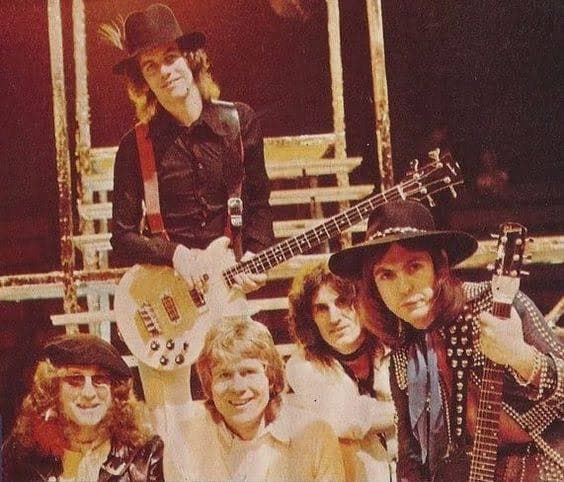
Defiant roar from the stage that turns performance into communion and noise into belonging.
When Slade released We’ll Bring The House Down in January 1981, the song surged into the UK Singles Chart and peaked at number ten, a striking comeback moment for a band many had prematurely consigned to nostalgia. It also lent its name to the album We’ll Bring The House Down, a record that reasserted Slade’s relevance in a decade that was rapidly reshaping the sound and attitude of British rock. This was not a polite return. It was a statement of intent, delivered at full volume.
At its core, We’ll Bring The House Down is not a song about architecture or chaos, but about the sacred contract between a rock band and its audience. Written during a period when Slade were rebuilding their live reputation after years of shifting trends, the song captures the raw electricity of the concert hall as a place of collective release. Noddy Holder’s vocal is less a performance than a rallying cry, hoarse, urgent, and gleefully unrefined. He does not invite the crowd to listen. He dares them to join.
Musically, the track strips rock and roll to its most essential elements. A pounding, almost martial drum pattern sets the pace. The guitars arrive thick and muscular, built for resonance rather than precision. The chorus is engineered for mass participation, its chant like phrasing designed to echo back from a thousand throats. This was Slade remembering exactly who they were. A band forged in sweat soaked halls, where volume was not excess but necessity.
Lyrically, the song avoids narrative complexity, and that restraint is precisely its strength. There is no story to follow because the story is happening now, in the room, in the moment of sound overwhelming silence. The repeated promise to bring the house down becomes a metaphor for transcendence through noise. Walls are not destroyed physically but dissolved emotionally. Class, age, and self consciousness collapse under the shared impact of rhythm and volume.
The cultural resonance of We’ll Bring The House Down lies in its timing. Released as punk’s aftershocks still rippled through British music and new wave polished rock into sharper shapes, Slade responded by doubling down on communal excess. Where others pursued irony or detachment, Slade offered sincerity at full blast. It reminded listeners that rock music did not need reinvention to matter. It needed conviction.
Over time, the song has endured as a live staple and a symbol of Slade’s refusal to fade quietly. It stands as evidence that relevance is not always about innovation. Sometimes it is about remembering the original purpose of the music. To gather people together. To raise the volume. And for a few unforgettable minutes, to bring the house down.