
A Gentle Voice Offering Shelter, Memory, and Mercy in a Noisy World
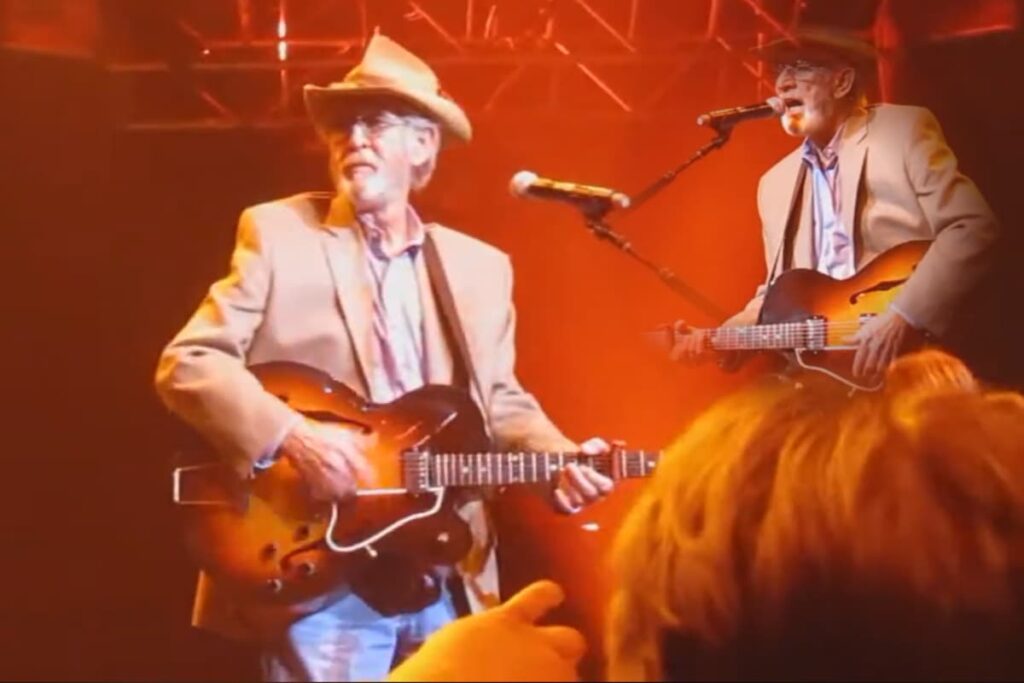
When Don Williams stepped onto the stage at the We’re All for the Hall Benefit Concert (2012), the moment carried the quiet authority of a career built on trust rather than spectacle. By that point, Williams was long established as one of country music’s most reliable chart presences, an artist whose recordings repeatedly reached the upper tiers of the Billboard Hot Country Songs chart across the 1970s and 1980s, many drawn from albums that became staples of the genre’s canon. His body of work, issued across albums that favored restraint over flash, had already secured him a singular place in American music. This benefit appearance did not arrive as a comeback or a reinvention, but as a reaffirmation of everything his audience had always believed him to be.
The concert itself was dedicated to preserving the legacy of the Country Music Hall of Fame, a cause that aligned naturally with Williams’ artistic identity. He was never a revolutionary in the loud sense. His revolution was one of tone, pacing, and emotional honesty. In a setting filled with celebrated voices and high-wattage personalities, Williams’ performance stood apart precisely because it refused to compete. It listened instead. That listening quality is central to understanding why his songs, regardless of specific chart positions or album contexts, have endured so deeply.
Williams’ artistry was built on an almost radical simplicity. His baritone was warm but unadorned, carrying lyrics that favored clarity over cleverness. At the 2012 benefit concert, that voice arrived seasoned by time, slightly roughened at the edges, yet carrying even more emotional gravity. What emerged was not nostalgia as sentimentality, but nostalgia as lived experience. Each phrase felt like it had been carried a long distance, arriving with the weight of years and the calm acceptance of someone who had made peace with them.
Lyrically, the songs Williams became known for often circled themes of reassurance, belonging, and emotional steadiness. Love, in his world, was not reckless or dramatic. It was dependable. That sensibility resonated powerfully in a benefit setting, where the purpose was preservation rather than profit. His performance functioned almost as a thesis statement for traditional country music itself: that the genre’s greatest strength lies in its ability to speak softly and still be heard.
Musically, Williams’ arrangements avoided excess. Clean guitar lines, measured rhythms, and space between notes allowed meaning to breathe. At the Hall benefit, this approach felt especially poignant. The absence of ornamentation drew attention to the song’s emotional core, reminding listeners that endurance in music is rarely achieved through volume. It is achieved through sincerity.
Culturally, this performance now stands as a late-career snapshot of an artist who never chased trends and therefore never aged out of relevance. Don Williams did not need reinvention to remain vital. His appearance at the We’re All for the Hall Benefit Concert (2012) served as a quiet reminder that authenticity, once established, does not fade. It settles in. And for those who were listening that night, it felt less like a performance and more like being welcomed home.