
Quietly defiant meditation on hope, loss, and the promises America whispers to every restless heart
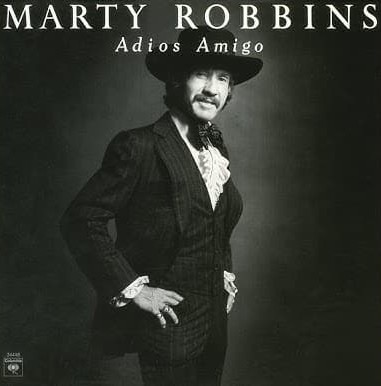
When Marty Robbins released The American Dream as both a song and a statement, it arrived in 1979 as the title track of his album The American Dream, climbing into the Top 20 of the Billboard Hot Country Singles chart. By then, Robbins was no longer merely a hitmaker but an elder statesman of country music, a singer whose voice carried decades of Western ballads, heartbreak anthems, and moral reflections. This song stood apart not as a chart chasing single but as a reflective summation of a life spent observing people, places, and the fragile space between ambition and reality.
At its core, The American Dream is not a celebration. It is a reckoning. Robbins approaches the idea of America the way a seasoned traveler approaches a long road already walked. The song speaks of aspiration and movement, of people who leave something behind in pursuit of something better, yet it never pretends that success is guaranteed or even clearly defined. Unlike the cinematic gunfighters of his earlier classics, the protagonists here are ordinary citizens, men and women who measure victory in survival rather than glory.
Musically, the arrangement mirrors that restraint. The production is understated, allowing Robbins voice to remain front and center. There is no dramatic flourish, no soaring chorus designed to overwhelm. Instead, the melody moves steadily, almost patiently, as if it understands that dreams are not won in moments but endured across years. This pacing reinforces the song’s emotional gravity. It listens more than it speaks. It observes more than it judges.
Lyrically, Robbins frames the American dream as a promise that sustains even when it disappoints. The song acknowledges struggle without bitterness and ambition without arrogance. What makes it powerful is its refusal to simplify. The dream is neither a lie nor a guarantee. It is an idea people carry with them, sometimes heavy, sometimes sustaining, often both. Robbins sings from a place of empathy rather than instruction, offering no solutions, only recognition.
Culturally, The American Dream resonates because it arrived at a moment when the myth of endless prosperity was already showing cracks. Yet Robbins does not engage in protest or polemic. His approach is personal, almost intimate. He sings as someone who has seen success firsthand and understands its cost. That perspective gives the song its quiet authority. It feels earned.
In the context of Marty Robbins late career, this song functions as a reflective pause, a chapter written by an artist who no longer needed to prove anything. It is a song about faith in possibility, tempered by experience, delivered by a voice that sounds like it has lived every word. The American Dream endures not because it flatters the listener, but because it tells the truth gently, trusting that honesty itself is a kind of hope.