
A quiet declaration of devotion where endurance becomes the deepest form of love
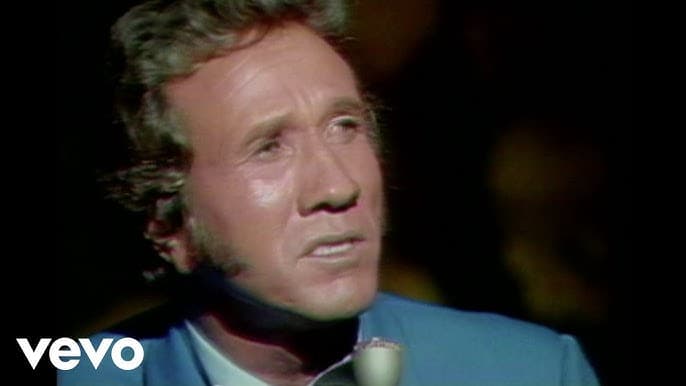
When Marty Robbins released “My Woman, My Woman, My Wife” in 1970, it arrived not as a dramatic plea or a grand romantic gesture, but as something rarer in popular music: a calm, resolute affirmation of lifelong commitment. Issued as a single and later anchoring the album My Woman, My Woman, My Wife, the song rose to No. 1 on the Billboard Hot Country Singles chart and crossed over to the pop audience, peaking inside the Top 50. By the time Robbins performed it live at the 1970 CMA Awards, the song had already established itself as one of the defining statements of mature country songwriting at the dawn of the new decade.
What makes “My Woman, My Woman, My Wife” endure is not a dramatic backstory or a flashy arrangement, but its unflinching emotional honesty. Written by Johnny Tillotson, the song rejects the youthful fantasy of love as conquest or obsession. Instead, it frames love as shared survival. From the opening lines, the narrator acknowledges his own imperfections, even his failures, while placing his partner at the emotional center of the story. This is not a song about passion at its peak, but about loyalty after the storms have passed.
Robbins’ performance is crucial to the song’s impact. By 1970, he was no longer the restless hitmaker chasing trends. His voice had gained weight and texture, carrying the authority of lived experience. He sings with restraint, never pushing the melody, allowing the words to breathe. That restraint turns the song into a confession rather than a performance. Each phrase sounds as though it has been carefully considered, as if the narrator understands that love, once proven, does not need embellishment.
Lyrically, the song redefines heroism within a marriage. The woman is not idealized as flawless or distant. She is praised for her patience, her endurance, and her willingness to stand by a man who openly admits he has been difficult to love. In the cultural context of 1970, when country music often leaned on traditional gender archetypes, this perspective feels quietly progressive. The song does not elevate the man as the unquestioned head of the household. Instead, it acknowledges emotional dependence and gratitude, positioning the woman as the emotional backbone of the relationship.
Musically, the arrangement is deliberately understated. Gentle strings, a steady rhythm section, and subtle background vocals create a sense of stability rather than tension. Nothing distracts from the narrative. The song moves forward with the inevitability of time itself, mirroring the long years the lyrics describe. It is country music as reflection, not spectacle.
The legacy of “My Woman, My Woman, My Wife” lies in its refusal to dramatize love. It honors the quiet victories, the unseen compromises, and the loyalty that survives disappointment. Robbins’ live performance at the CMA Awards crystallized this message for a national audience, presenting country music not as escapism, but as a mirror held up to real lives. In the end, the song remains a reminder that the deepest love stories are often the ones told without raised voices, only steady hearts.