
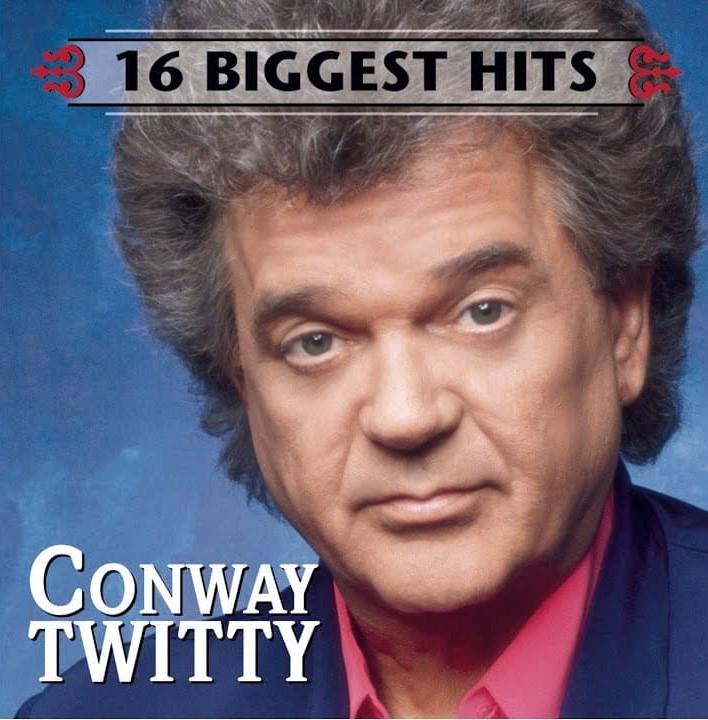
A collection of heartbreak, tenderness, and lived experience where one voice turns ordinary human longing into timeless country music
The Very Best Of Conway Twitty, featuring classics such as Hello Darlin’, Don’t Cry Joni, Fifteen Years Ago, and To See an Angel Cry, stands as more than a greatest hits compilation. It is a portrait of an artist who mastered emotional intimacy with extraordinary consistency across decades of country music. By the time collections like this emerged, Conway Twitty had already become one of the most commercially successful and emotionally recognizable voices in the genre, earning an unprecedented run of number-one country singles while building albums that defined the emotional character of 1970s and early 1980s country music.
Yet statistics alone never fully explain Conway’s impact. What made his recordings endure was the way he approached vulnerability. He sang love songs not as distant fantasies, but as emotional confessions shaped by regret, desire, memory, loneliness, and quiet devotion. Listening to these songs together reveals how deeply he understood the fragile emotional spaces between people.
Hello Darlin’, perhaps his most iconic recording, remains a masterclass in restraint. Released in 1970 and becoming one of the defining country hits of the era, the song opens not with dramatic instrumentation, but with Conway’s soft spoken greeting. That single phrase immediately creates intimacy. The performance unfolds slowly, allowing heartbreak to emerge through hesitation and emotional exhaustion rather than theatrical despair. Conway understood that some of the deepest pain exists in ordinary conversations between people who once loved each other completely.
In Don’t Cry Joni, the emotional tension shifts toward regret and timing. The narrative structure gives the song unusual dramatic depth for mainstream country music. Conway portrays a man realizing too late the emotional consequences of dismissing someone’s love years earlier. What makes the song especially haunting is its sense of irreversible distance. By the end, the narrator is left confronting not only lost love, but lost possibility itself.
Fifteen Years Ago moves into even more reflective territory. The song captures the disorientation of memory, where the past feels emotionally present despite the passage of time. Conway’s delivery remains calm and measured, yet beneath that control lies profound sadness. He sings not like someone reliving youth nostalgically, but like a man confronting how quickly life changes without permission.
Then comes To See an Angel Cry, one of Conway’s most emotionally devastating performances. The song explores guilt and emotional responsibility with striking honesty. Rather than presenting heartbreak through self-pity, Conway inhabits the pain of witnessing someone else suffer because of love’s collapse. The emotional power comes from empathy rather than bitterness.
Vocally, these recordings demonstrate why Conway Twitty became such a towering figure in country music. His voice possessed remarkable richness and control, capable of sounding simultaneously smooth, intimate, and emotionally exposed. He rarely overperformed emotion. Instead, he allowed subtle phrasing and pacing to carry enormous emotional weight.
Musically, the collection reflects the elegance of classic country production. Steel guitars, restrained rhythms, soft orchestration, and uncluttered arrangements create space for storytelling rather than spectacle. These songs depend entirely on emotional credibility, and Conway delivers that effortlessly.
What makes The Very Best Of Conway Twitty so enduring is the cumulative emotional effect of hearing these songs together. They form not merely a catalog of hits, but a study of adult emotion in all its complexity. Love remembered too late. Regret carried quietly. Devotion surviving disappointment. Loneliness accepted rather than dramatized.
And within those softly lit melodies and deeply human confessions, Conway Twitty leaves behind one of country music’s greatest legacies. Proof that the strongest voices are not always the loudest, but often the ones willing to sound the most vulnerable.