
A lone rider chasing love and destiny through the desert, where every verse moves like the final pages of an American myth
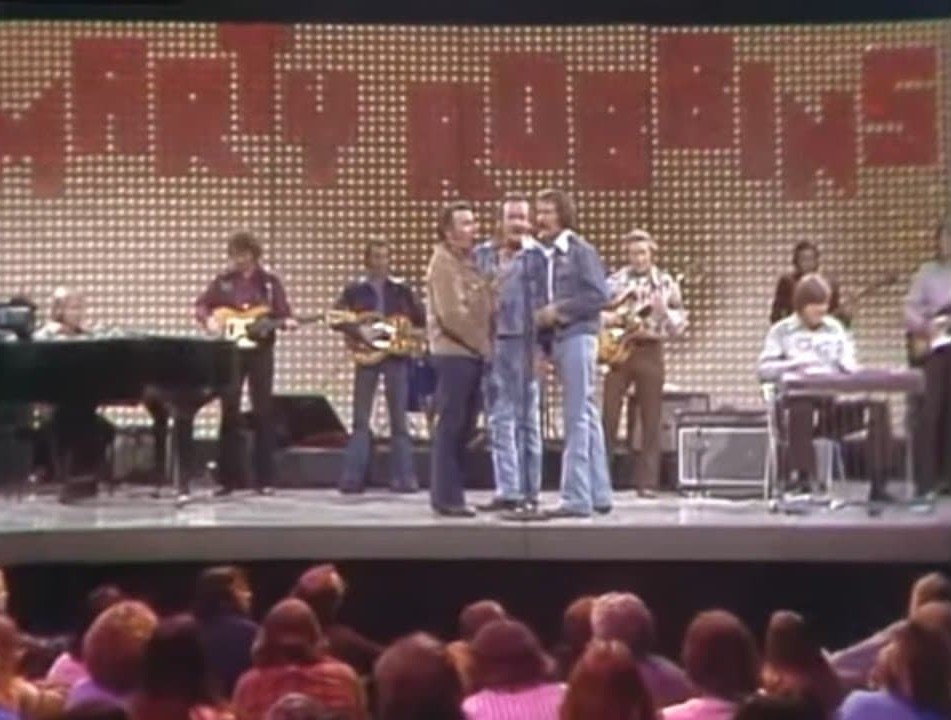
When Marty Robbins performed El Paso live on The Midnight Special in 1973, the appearance felt less like a television performance and more like the return of a legendary storyteller to one of country music’s most enduring narratives. Originally released in 1959 as part of the landmark album Gunfighter Ballads and Trail Songs, El Paso became a massive crossover success, reaching number one on both the country and pop charts while winning the Grammy Award for Best Country & Western Recording. By the time Robbins revisited the song in 1973, it had already transcended hit status to become part of American musical folklore itself.
What makes this live performance especially compelling is the contrast between the song’s cinematic scale and Robbins’ calm delivery. El Paso is, at its core, a tragic western ballad built around obsession, violence, escape, and doomed devotion. In lesser hands, the narrative could easily collapse into melodrama. But Robbins always approached the song with remarkable emotional control, allowing the story to unfold naturally through pacing and detail rather than theatrical excess.
The narrative remains one of the most vividly constructed in popular music history. A cowboy falls hopelessly in love with the dancer Feleena in the rose-colored cantina of El Paso. Jealousy leads to violence, violence leads to escape, and escape ultimately circles back toward inevitable death. Yet the genius of the song lies not simply in plot, but in atmosphere. Robbins paints the emotional landscape with extraordinary precision. Dust, moonlight, desert silence, and longing become inseparable from the narrator’s fate.
By 1973, Marty Robbins performed the song not as a novelty hit from the past, but as a living piece of storytelling tradition. His maturity deepened the performance. The voice retained its smooth clarity, but there was now additional emotional gravity within it, as though Robbins himself understood even more fully the loneliness and fatalism embedded inside the lyric.
Musically, the live arrangement preserves the essential western textures that made the original recording so distinctive. Spanish guitar flourishes, restrained rhythm, and spacious melodic phrasing create an atmosphere almost cinematic in scope. Unlike many live television performances of the era that rushed songs for pacing, this version allows the story room to breathe. Every verse matters because every detail contributes to the emotional inevitability of the ending.
There is also something culturally significant about seeing El Paso performed on The Midnight Special in 1973. By then, American popular music had changed dramatically. Rock had become heavier and more confrontational, singer-songwriters increasingly introspective, and country music itself was evolving commercially. Yet Robbins’ performance demonstrated that traditional storytelling ballads still possessed extraordinary emotional power when delivered with conviction.
What continues to separate El Paso from countless narrative songs that followed is its emotional sincerity. Robbins does not romanticize violence or tragedy. Instead, he presents them as consequences of uncontrollable longing. The narrator’s fate feels tragic precisely because his devotion feels genuine.
Watching the 1973 performance today carries a certain haunting beauty. Robbins stands poised and composed beneath the studio lights, calmly guiding listeners through a story already etched into musical history. There is no need for spectacle because the song itself already contains an entire world.
And within the sweeping desert imagery and doomed romance of El Paso, Marty Robbins achieves something extraordinarily rare in popular music. He transforms a three-minute song into mythology, where heartbreak rides forever beneath an endless western sky.