
The Quiet Weight of Farewell and the Inevitability of Mortality
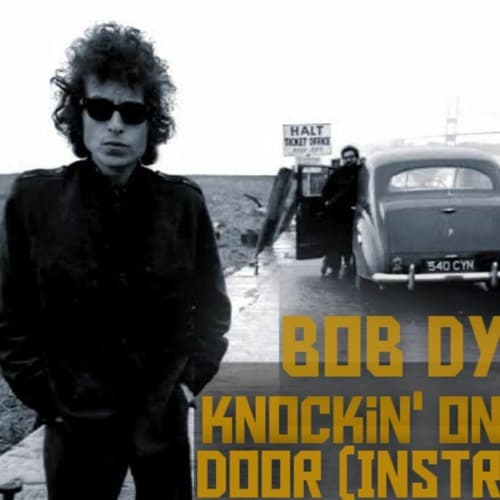
Bob Dylan’s Knockin’ on Heaven’s Door, released in 1973 as part of the soundtrack for the film Pat Garrett and Billy the Kid, occupies a rare space in popular music where simplicity and profundity coexist. The song, which reached number 12 on the UK Singles Chart, became one of Dylan’s most immediately recognizable compositions, transcending its cinematic origins to enter the collective consciousness as a meditation on mortality and surrender. Written at a moment when Dylan was already an established cultural icon, the track exemplifies his capacity to distill universal emotion into the most unadorned melodic and lyrical forms.
The genesis of Knockin’ on Heaven’s Door is inextricably linked to the narrative demands of Pat Garrett and Billy the Kid, a Western in which the themes of law, loyalty, and the inexorability of death are central. Dylan composed the song specifically for the film’s climactic moment, when a lawman meets his end, embodying a resignation that is as lyrical as it is narrative. Unlike much of Dylan’s earlier, more cryptic work, the song’s lyrics are starkly transparent: “Mama, take this badge off of me / I can’t use it anymore.” These lines, repeated with solemn cadence, do not merely describe a character’s death; they evoke the universal anxiety of approaching the unknown, the moment when agency is surrendered and time itself becomes irrelevant. Dylan’s voice, soft and deliberate, transforms what could have been a mere narrative device into a hymn of quiet despair and dignity.
Musically, the song is deceptively simple. Its cyclical chord progression and restrained instrumentation—a gentle strumming of acoustic guitar, subtle piano accents, and a mournful organ—create a contemplative space that allows the lyrics to resonate fully. There is a meditative quality in the repetition of the chorus, a rhythm that mirrors the heartbeat slowing at the threshold between life and death. The arrangement, sparse yet emotionally potent, reflects Dylan’s understanding that music need not be ornate to communicate profundity; often, its power lies in what is left unsaid.
Culturally, Knockin’ on Heaven’s Door has become emblematic of Dylan’s enduring influence on the musical and social imagination. Covered by a wide array of artists across genres—from Eric Clapton to Guns N’ Roses—the song’s universal appeal lies in its ability to address loss, vulnerability, and surrender without sentimental excess. It is a rare work that simultaneously inhabits the cinematic, the personal, and the archetypal, reminding listeners of the fragile intersection between human fragility and artistic permanence. In Knockin’ on Heaven’s Door, Dylan offers more than a soundtrack; he provides a meditation on the inevitability of endings, a quiet benediction that continues to resonate nearly half a century after its creation.
The song remains, above all, a testament to the power of musical minimalism infused with emotional depth. Dylan steps back, allows the melody and lyric to breathe, and in that space, listeners confront the universal truths of life and death, finding within its gentle cadences both solace and haunting reflection.