
Meditation on devotion that unfolds not as passion, but as patience learned over time.
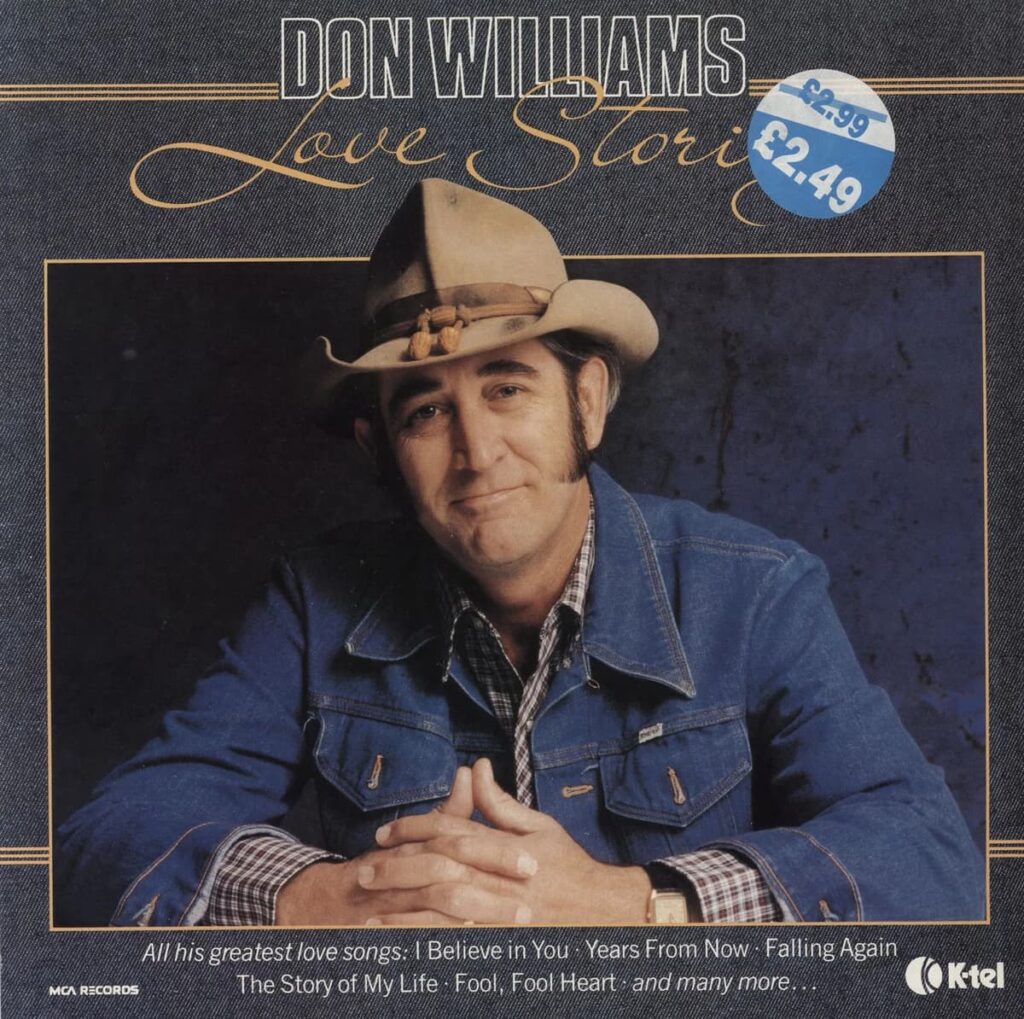
Released in 1982, Falling In Love became a Top 10 hit on the Billboard Hot Country Singles chart for Don Williams, appearing on the album Listen to the Radio, a record that captured him at the height of his commercial confidence and artistic restraint. By that point, Williams was no longer chasing the sound of Nashville. Nashville was following him, learning how to speak more softly, how to leave space where other singers reached for emphasis.
What makes Falling In Love endure is not narrative drama or lyrical surprise, but its refusal to overstate anything at all. The song does not rush toward romance. It observes it forming, almost reluctantly, as though love is something that happens when two people stop insisting on it. In Williams’ hands, falling in love is not a moment. It is a condition that settles in slowly, unnoticed, until it becomes unavoidable.
There is no documented anecdote of a single afternoon or specific muse behind the song, and that absence ultimately serves it well. Falling In Love feels intentionally universal, written to sound as though it could belong to anyone who has reached the age where love is no longer idealized, but weighed. The lyric language is plain, conversational, even modest. That simplicity is deceptive. Each line carries the gravity of lived experience, the sense that affection earned through time carries more truth than affection declared in haste.
Musically, the arrangement mirrors that philosophy. The tempo remains unhurried. The instrumentation never crowds the vocal. Acoustic textures dominate, supported by gentle electric phrasing that never interrupts Williams’ calm center. His baritone does not plead or persuade. It states. This was always his greatest strength. He sang as though the listener was already leaning in, already willing to listen, already familiar with the feeling being described.
Within the context of Listen to the Radio, the song reinforces an artistic identity Williams had refined across the late 1970s and early 1980s. This was country music for adults who had moved beyond spectacle. While contemporaries leaned into crossover polish or emotional excess, Williams perfected restraint. Falling In Love stands alongside his best work as an example of how understatement can carry more emotional weight than confession.
Culturally, the song reflects a moment when country music briefly allowed quiet voices to lead. It did not redefine the genre, but it affirmed an alternative path, one where sincerity did not require intensity. Decades later, its appeal remains intact precisely because it does not announce itself as timeless. It simply is.
For listeners returning to Falling In Love now, the song feels less like a love story and more like a recognition. It speaks to the realization that the most meaningful connections rarely arrive with ceremony. They arrive gradually, calmly, and once they do, they stay.