
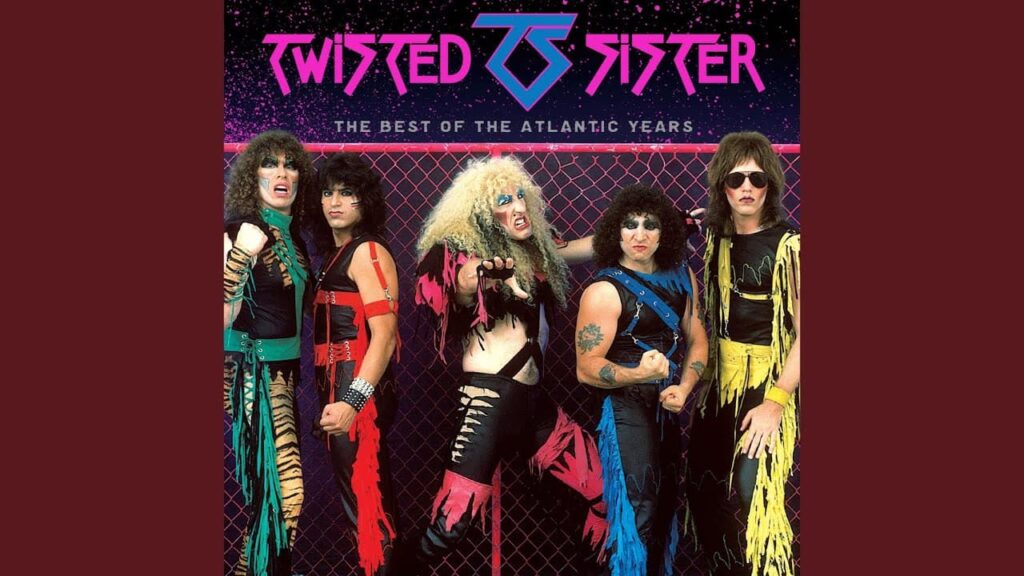
A Rallying Cry Against Conformity and Authority That Reverberated Through an Era
“We’re Not Gonna Take It” by Twisted Sister, released in 1984 as the lead single from the album Stay Hungry, became an instant anthem of youthful defiance. The song climbed to number 21 on the Billboard Hot 100, marking the band’s most commercially successful entry into mainstream American charts, and it remains the touchstone for Twisted Sister’s identity: rebellious, unapologetic, and larger-than-life. Its unmistakable opening guitar riff and Dee Snider’s commanding vocal delivery immediately set the stage for a declaration of resistance, one that transcended the mere trappings of glam metal to resonate with listeners across generational and cultural lines.
The genesis of “We’re Not Gonna Take It” lies not in grandiose rebellion alone but in the meticulous crafting of an idea that was as theatrical as it was confrontational. Dee Snider, the band’s frontman and principal lyricist, approached songwriting with an almost narrative-driven ethos. The lyrics present a scenario of unyielding opposition against an unnamed oppressive force, a universal authority figure rather than a personal grievance. Lines such as “We’ve got the right to choose and there ain’t no way we’ll lose it” encapsulate a sentiment of empowerment, inviting listeners to locate their own battles within the song’s defiant chorus. Snider’s intent, delivered through his larger-than-life persona, was not merely to provoke, but to articulate a collective sentiment of frustration and liberation that had been simmering in youth culture throughout the early 1980s.
Musically, “We’re Not Gonna Take It” balances simplicity with an almost cinematic sense of tension and release. The track’s straightforward verse-chorus structure is augmented by sing-along harmonies and a buoyant, almost mischievous energy that ensures accessibility without diluting its rebellious message. The song’s iconic music video, with its exaggerated, cartoonish narrative of domestic rebellion, reinforced the theatricality inherent in Twisted Sister’s ethos, allowing the band to harness the emerging power of MTV as a vehicle for both entertainment and cultural commentary. In this respect, the track was as much a product of visual culture as it was of the recording studio, cementing its place in the 1980s’ multimedia landscape.
The enduring legacy of “We’re Not Gonna Take It” lies in its capacity to articulate dissent with humor, vitality, and unwavering confidence. It is a song that refuses to age because its core message—resistance, autonomy, and self-assertion—remains universally compelling. For Twisted Sister, this track was not merely a hit single but a defining statement of artistic identity, a declaration that rebellion can be both raucous and joyous, and that music, at its best, can serve as a clarion call for anyone who has ever felt constrained by the rules of others. Its resonance continues today, echoing in arenas, rallies, and personal playlists as a timeless symbol of defiance turned celebratory.