
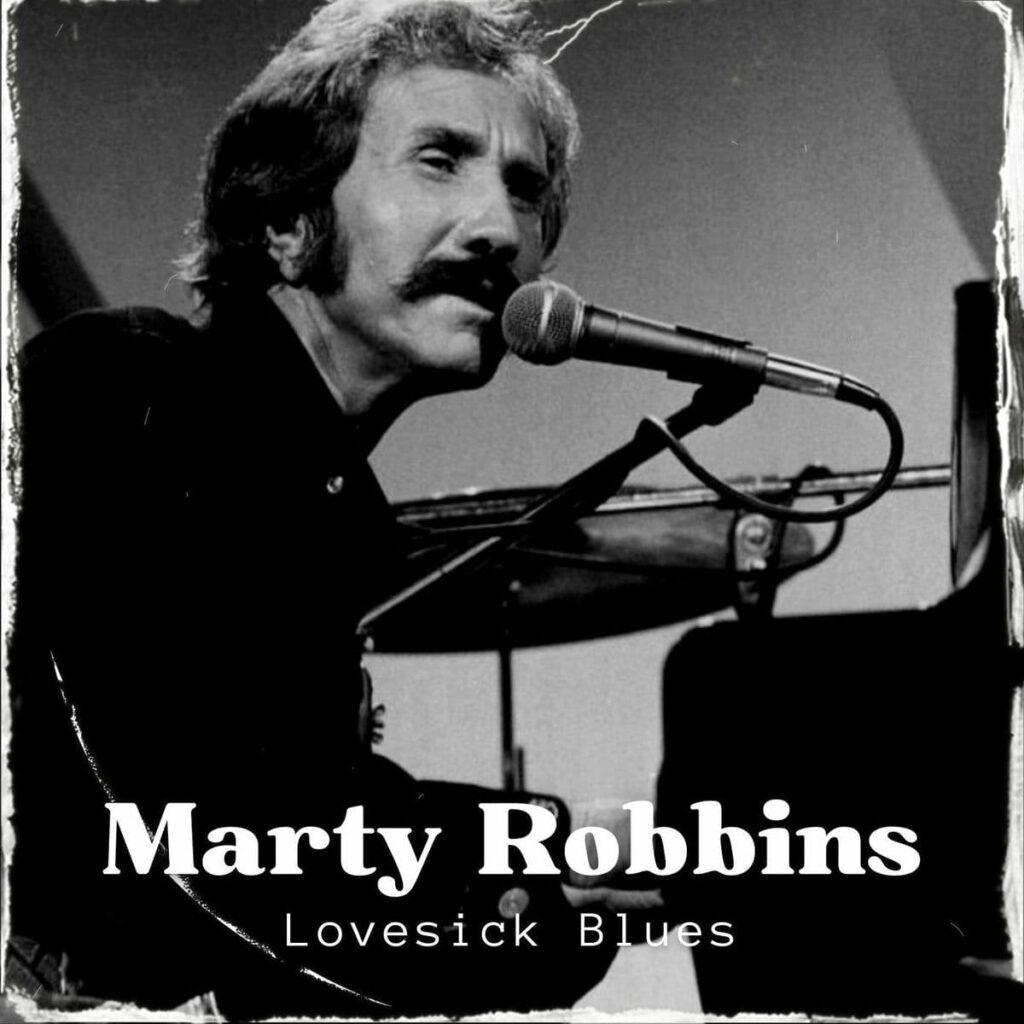
A Poignant Lament That Only a Photograph Can Freeze a Heartbeat
“Only a Picture Stops Time” stands as one of the more quietly heartbreaking ballads in Marty Robbins’ catalog. Originally appearing on his 1964 album R.F.D., this song reveals a man haunted by what’s gone, finding solace in nothing but the stillness of a memory captured in film. Though it was not released as a major chart-topping single, it remains deeply emblematic of Robbins’ skill at blending gentle country storytelling with emotional intensity.
Robbins’ voice, warm yet haunted, delivers the sorrow of a love that has ended but refuses to fade. The singer looks upon photographs of a former lover—pictures taken “before your love for me died”—and in those frozen images, he discovers a refuge: “only a picture stops time.” The lyrics make no pretense of hope for the future; rather, they dwell in a suspended present, a liminal space where memory and longing converge.
Musically, the arrangement is understated: gentle guitar, soft cadence, and that trademark Robbins vocal – a voice that can carry regret and tenderness simultaneously. There are no sweeping orchestral flourishes here, just a deliberate quietness that mirrors the inner emptiness of the narrator. He holds the photograph close, almost palpably — as the song puts it, “I hold your picture so close to my heart.” That image becomes more than just a keepsake; it is the only bridge to the moments when he believed their love might last.
Thematically, “Only a Picture Stops Time” encapsulates the notion that photographs are not just passive records of a past event—they are portals. For Robbins’ narrator, each heartbeat is a reminder of his distance from what once was. In opening the dusty album and gazing at the faded faces, he slips back into the past: “I relive the moments when you were mine.” It’s a meditation on loss, on absence, and on how physical objects—especially images—carry emotional weight. The photograph is both a balm and a torment: it preserves the person he loved, but also mocks him with the inescapable truth that the love has died.
There’s a relational inversion in the closing lines: he hopes she kept his picture too — not just out of sentimentality, but as an unspoken plea for mutual remembrance. “Since you once loved me I know you’ll understand / Why I keep your picture … I hope you kept mine.” That wish becomes a quiet prayer: let me exist in your memory the way you exist in mine.
Though “Only a Picture Stops Time” may not have been a commercial juggernaut, its emotional resonance endures. It is the kind of song that radiates in the silence after the music ends — a whisper of love’s persistence, even after its end. In the world Robbins built through his music, heartbreak doesn’t always come with drama; sometimes it just lingers in a photograph. And in that lingering light, time may not stop, but for a heartbeat, the memory feels as real as ever.