
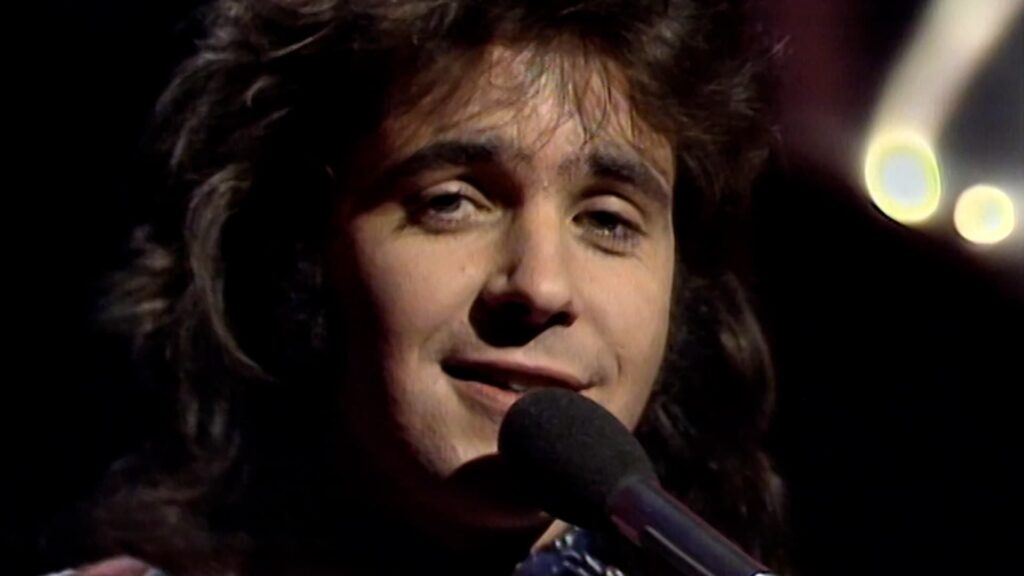
A quiet curtain-call whispered into the night of youth’s finale
When SEPTEMBER 15TH appears on the back side of the album sleeve of Rock On (1973) by David Essex, it stands not as a spotlight anthem but as a reflective epilogue to the album’s youthful swagger. The album itself made a strong impact—peaking at No. 7 in the UK Albums Chart. Meanwhile Essex’s leading single from that album, Rock On, surged to No. 3 on the UK Singles Chart in September 1973.
This track, by contrast, did not chart as a flagship single. Yet it offers one of Essex’s most intimate moments—a short, hushed piece of introspection undercurrents beneath the glam-rock surface.
In the opening lines of the song the narrator remarks, “I’ve been doing a show for a long time, a show about a friend of mine,” placing us in the aftermath of performance, looking back beyond the spotlight. The placement of the track as the final item on side two (its runtime less than one-and-a-half minutes) gives it the air of a graceful exit rather than an encore.
Its musical backdrop is sparse but laden: subtle piano or keyboard undergirds the voice, strings and sonic space expand gently, leaving the listener in a liminal moment. In that simplicity lies the strength—Essex trades big choruses for contemplative cadence, the voice slightly weary, the sentiment inward-turned.
Lyrically the piece carries the weight of farewell without explicitly naming it. It evokes the end of a chapter—“the lights have gone down”, “the curtain fades”—it is less about triumph than about passage. Within the context of Essex’s early career—his breakout via “Rock On” and his emergence as a figure of youth culture—the song can be read as a whisper of what follows the roar: the reckoning with what has been given, what has been lost, and what remains only in memory. Essex’s association with the glam-rock era and his acting roles (for example in the film That’ll Be the Day) accelerate a reading of the song as meta-commentary: the star on stage now alone off-stage, the friend of mine the persona or the public self.
Musically, the decision to include such a brief, understated track at the end of the album signals a kind of maturity—or at least a willingness to concede that not every moment of youth is forged in brashness and bravado. The track becomes a kind of hinge: from energy to reflection, from the thrill of the show to the quiet of the dressing-room. One might imagine the lights coming down, the crew packing up, the band walking off into dusk; the song provides the sound-track to that exodus.
Culturally the song remains a lesser-known gem in Essex’s catalogue, overshadowed by his major chart hits. Yet it rewards those who dive beneath the surface. In the growing canon of 1970s British rock and pop, where big statements often dominate, SEPTEMBER 15TH stands out for its humility and its emotional truth. It reminds us that the end of a show is also a beginning of something else: reflection, memory, and the subtle ache of change. For listeners attuned to the inner life of a performer, or the quiet interludes of rock history, this song offers a moment of stillness—and in that stillness, a fierce honesty.