
A LOVER’S LONGING THAT CAN’T BE DENIED, EVEN AT DAWN
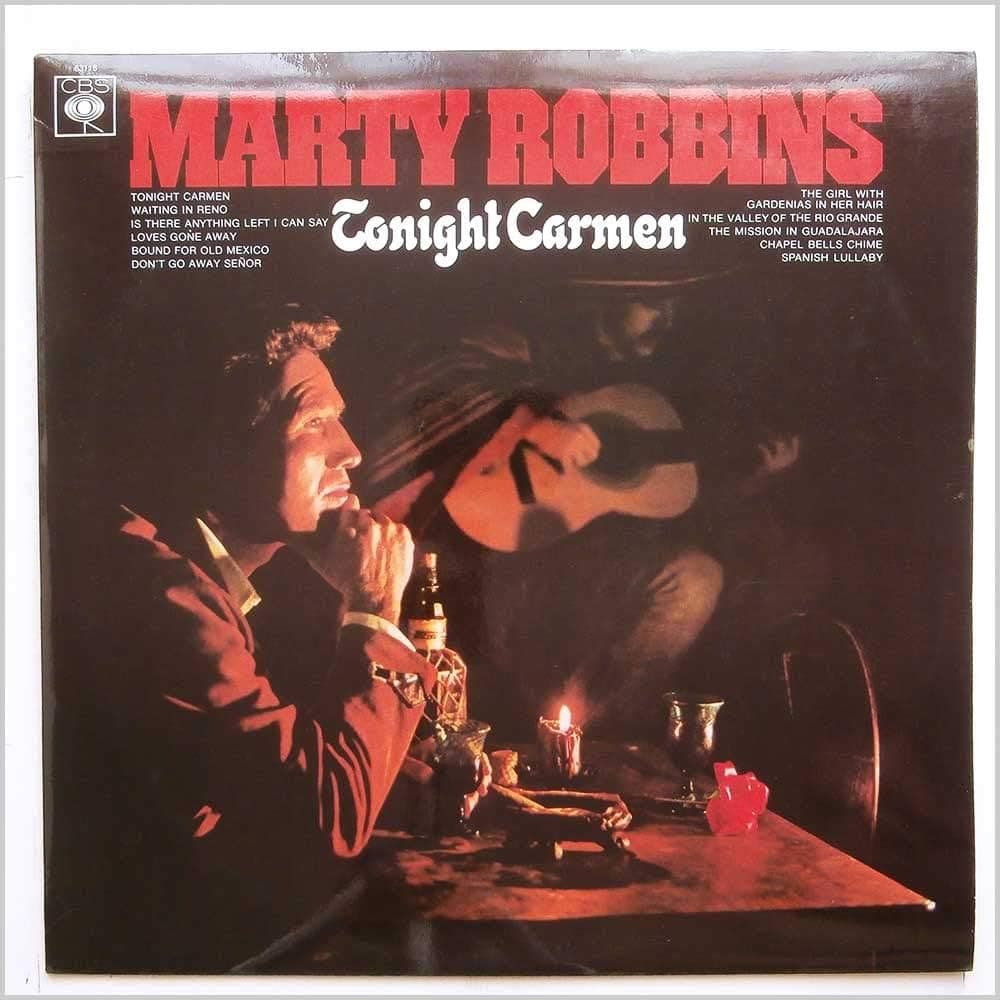
When Marty Robbins released “Tonight Carmen” in May 1967 as the lead single from his album Tonight Carmen, he struck gold: the song soared to #1 on the country charts, holding the top spot for a week and remaining on the charts for a total of twelve weeks. The single’s success anchored an album that would itself become a country staple: Tonight Carmen (released August 1967 on Columbia Records), which peaked at #4 on the Billboard country album chart and lingered on the chart for 25 weeks.
In the tapestry of Marty Robbins’s career, “Tonight Carmen” occupies a uniquely intimate space. Robbins, already celebrated for his mastery of ballads and Western sagas (“El Paso,” “Big Iron”), here channels that same storyteller’s spirit into a portrait of love tempered by longing, regret, and fragile hope. Unlike his gunfighter epics, this is not a tale of dusty trails or desert showdowns—it’s a quiet reckoning, a man at his most vulnerable.
From the very first lines—“Tonight I am achin’, my body is shakin’ / Tonight Carmen’s comin’ back home”—Robbins sets a tone of emotional tension. There is no bravado, only raw anticipation. The protagonist’s body betrays him; his hand trembles. The resistance he once held vanishes. In framing Carmen’s return as imminent, Robbins doesn’t just describe love—he dramatizes the physical, almost visceral impact it has on him.
The lyrics reveal a complex relationship. “The lips that have kissed her … are lips that have cursed her at night”: he confesses not only love but torment, sessions of blame and regret. Those late-night curses point to a history of conflict, perhaps betrayal or misunderstanding, that scars their connection. Yet even in anger, his desire remains fierce. He imagines his hands breaking “the body I’m waiting to touch”—a violent impulse born of desperate yearning, balanced by tenderness and repentance.
Robbins is unflinching about his emotional nakedness. He has “placed pretty flowers … put brand new sheets on the bed,” preparing for Carmen’s return as though he can reshape the past through gestures. He replays memories—the way she tosses her head, the softness of her presence—each recollection loaded with longing and vulnerability.
There is a moment of self-reflection, too. He contemplates control over his life, how to master his emotions. But he realizes something inescapable: “There’s no way to hide it / The love that I have for my wife.” This is not a fleeting fling. Carmen is not just a muse; she is his wife, his anchor, and his torment. He’s not just waiting for her—he’s confessing the depth of his commitment, even as he acknowledges his own failings.
Musically, “Tonight Carmen” reinforces this emotional core through its gentle, steady country arrangement. The production, backed by Columbia and guided by producer Bob Johnston, leans into warmth and simplicity. There are no grand orchestral flourishes or showy instrumental solos—instead, Robbins’s voice carries everything. You can hear his trembling resolve, the soft ache in every note. The chord progression (often notated in E to G key shifts, per sheet music) gives the song a subtle lift as his emotional stakes rise.
Culturally, “Tonight Carmen” stands as a reminder that Marty Robbins’s talent was not limited to Western fantasies: he could also craft deeply personal love songs, ones grounded in regret, realism, and vulnerability. Its chart success underscores how such raw emotional storytelling resonated with listeners. It’s a song that never feels sentimental merely for its own sake; its power lies in its honesty.
In the broader arc of Robbins’s discography, the song often gets overshadowed by his more narrative-driven epics, yet it remains a jewel of quiet intensity. It’s a confession whispered across time, a soul laid bare, and an emotional homecoming that feels as fragile as it is inevitable.