
A Longing for Lost Love Carried by the Tides of the Sea
“The Sea and Me,” recorded by Marty Robbins and written by Jerry Byrd, is a haunting, ocean‑washed ballad that evokes the ache of a love that ebbs and flows like the tides. Featured on Robbins’s 1963 album Hawaii’s Calling Me, the song may not have been a chart-topping single, but it occupies a deeply emotional space in his catalogue — one where the steel guitar whispers like wind over coral sands, and solitude washes over the listener like warm trade winds.
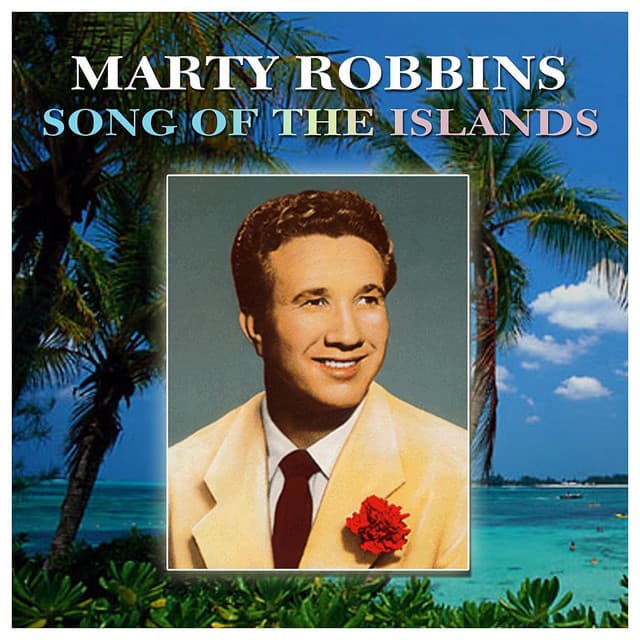
Marty Robbins, already renowned for his storytelling through a country-western lens, took a gentle detour into Hawaiian-inspired music with Hawaii’s Calling Me. The record was his exploration of island atmospheres, blending smooth vocals and lap-steel textures to conjure a sense of gentle longing. “The Sea and Me” sits near the beginning of the album, a centerpiece in that sunlit, melancholic soundscape. The composer, Jerry Byrd, was himself a master of the lap steel guitar and a longtime champion of Hawaiian music — his presence shaped much of the authenticity in the track.
In its emotional core, “The Sea and Me” is a meditation on loneliness and the persistent memory of a lost lover. The lyrics begin with the speaker confessing that the sea “keeps lonely company,” as if the vast, rhythmic ocean stands in for the absent beloved. The tides, the song says, have come and gone just like your love for me — a metaphor so plain yet so evocative, drawing a parallel between the natural world’s eternal cycles and the fickleness of human hearts.
There is also a hopeful tension in the song: the tradewinds whisper that she “might come back someday,” but this hope is undercut by a deeper solitude, as though the sea itself might carry her away forever. Moments of intimate memory flicker — “dark sandy beaches,” “our secret rendezvous” — places where they once met in secret, in a shared world that might now be just a dream. Against this backdrop, the breakers crash on “coral sands that say / We’ll bring her home again,” an image that blends mythical longing and oceanic inevitability into a single, sorrowful promise.
Musically, the song leans on Jerry Byrd’s steel guitar in a way that feels organic rather than ornamental. Byrd’s instrument evokes the lull of the waves and the buoyancy of memory — each note trembles like a wave cresting, then falling away just slightly. His history as both a steel-guitar legend and a devotee of Hawaiian sound makes his contribution more than just accompaniment; it’s almost a second voice, one that breathes life into the geography of loss.
From a legacy standpoint, “The Sea and Me” represents how Marty Robbins was not merely a cowboy balladeer, but a versatile artist capable of transporting listeners far from dusty trails into tropical reveries. On the Hawaii’s Calling Me album, it stands alongside other island-inspired songs — yet it remains one of the most emotionally resonant, because Robbins does not simply romanticize the sea, but uses it as a mirror of his own heart.
In the end, “The Sea and Me” is a quiet confession — about waiting, about memory, and about how the ocean can both cradle and conspire. It is Robbins’s way of telling us that love, like the sea, is vast, shifting, and sometimes, painfully elusive.