
A quiet revelation of love arriving in its own time
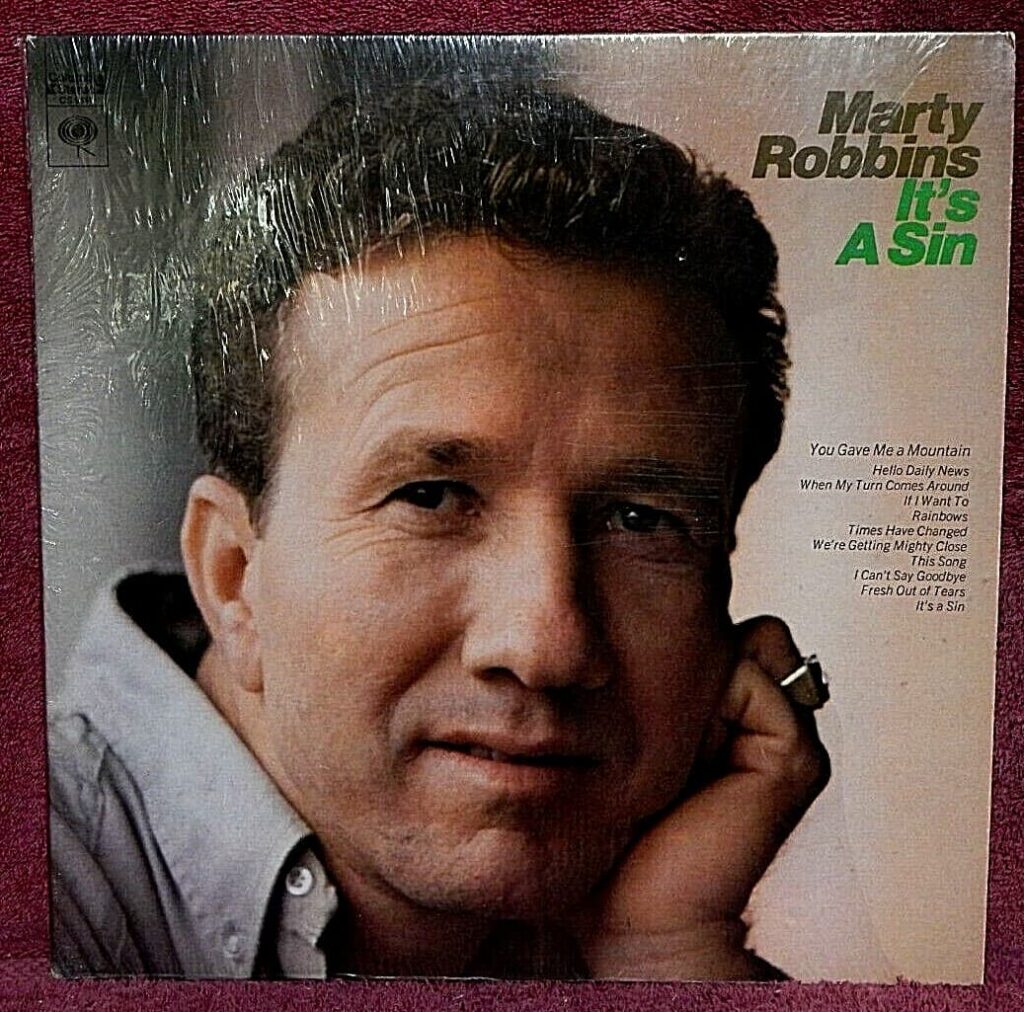
In It Finally Happened, recorded by Marty Robbins for his 1969 studio release It’s a Sin, the listener is invited into one of those rare country ballads where the emotional center does not lean on heartbreak or tragedy but on the quieter, more tender turning points that define a life. While the song was not positioned as a major chart entry at the time of release, it stands as one of the album’s most intimate reflections. Within the broader arc of Robbins’s late-1960s work, it represents his continued mastery of narrative-driven songwriting: the steady ability to turn simple romantic confession into a moment of revelation.
The power of It Finally Happened rests in its understated emotional architecture. Robbins does not rush the narrative. Instead, the lyrics unfold with the gentle cadence of someone who has lived long enough to recognize that love rarely arrives with spectacle. The opening lines function like a soft door swinging open, revealing a narrator who has spent years suspended between hope and uncertainty. There is no dramatic outcry, no grand thematic confrontation. The moment is quiet, almost fragile, which gives it an intensity far greater than volume could provide. Robbins builds the song on subtle tonal shifts that mirror the narrator’s changing inner world: the hesitation before admitting a long-buried wish, the warmth of an answered longing, and the dawning awareness that the emotional landscape has been altered for good.
What elevates the composition is the way Robbins uses musical restraint to give the lyrical message room to breathe. The arrangement relies on a gentle rhythmic foundation, soft acoustic textures, and a vocal performance shaped by patience rather than urgency. His voice carries the faint shimmer of gratitude, as if he is recounting a truth that only recently settled into place. The melodic line arcs upward with quiet confidence, suggesting a person who finally dares to believe in what once seemed impossible. These musical choices align seamlessly with Robbins’s artistic identity during this period. He had long been celebrated for his versatility, moving easily among cowboy epics, pop-leaning ballads, and deeply personal love songs. It Finally Happened occupies that last category, offering a glimpse into the reflective, emotionally mature side of his craft.
The song’s legacy lies in its authenticity. Without spectacle, it illuminates the transformative weight of a single moment when love becomes real rather than imagined. Robbins captures the stillness before a new life begins, shaping it into a timeless meditation on recognition, acceptance, and the quiet arrival of joy.