
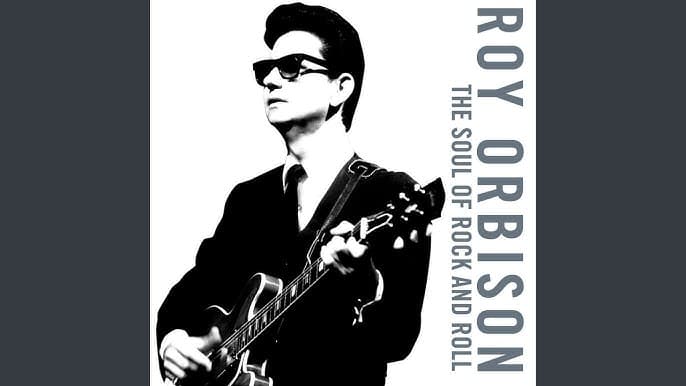
A SAD TRIBUTE TO LOVE’S UNSEEN SCARS
In (I’d Be) A Legend in My Time, Roy Orbison delivers a quietly devastating reckoning with heartbreak that captures love’s invisible wounds and the loneliness that lingers long after goodbyes. First recorded by Orbison in 1960 for his album Lonely and Blue, this song traces its roots to songwriter Don Gibson — a master of sorrow-soaked laments.
The opening strains arrive soft yet unyielding, as Orbison’s voice presses into the marrow of unspoken regret and unfulfilled longing. The lyrics propose an anguished hypothesis — if heartbreak, tears, and regret were the currency of fame, the narrator would be immortalized. But because there is no reward for a love lost or for the quiet ache of solitude, the wounds remain unrecognized and the name remains unknown.
The Song Within Its Time
Although the song did not make a major commercial splash as a single in Orbison’s discography, it stood among the melancholic landmarks of his early career. Included on Lonely and Blue, released in January 1961, the track contributed to an album that marked a profound shift. The record offered more than just rock-and-roll energy; it explored the deeper terrain of sorrow, reflection, and romance with a vulnerability that few of his contemporaries embraced.
Later, Orbison revisited the song on his 1967 tribute album Roy Orbison Sings Don Gibson, reaffirming his respect for Gibson’s songwriting and the emotional resonance of the piece.
Lyrical Themes and Emotional Resonance
The brilliance of (I’d Be) A Legend in My Time lies in its observation that true emotional devastation is rarely celebrated. The song frames heartbreak not as a momentary stumble but as a lifelong wound. Lines like “If heartaches brought fame… I’d be a legend in my time” cast heartbreak as a performance nobody applauds. Loneliness, regret, sorrow — all the heavy burdens of lost love — become the secret trophies no one collects.
Musically the song moves with a gentle, steady pulse — a rhythm that feels like a slow, inexorable walk through grief. Orbison’s vocal delivery gives it a sense of timelessness: his voice holds tenderness and weariness at once, as though decades of love and loss have shaped every note. The contrast between melody and subject matter deepens the pain — the music is almost soothing, but the truth it carries is harsh.
Cultural Legacy and Why It Still Matters
Over the decades, (I’d Be) A Legend in My Time has been covered by numerous artists, each drawn to its universal message of heartbreak and unacknowledged loss. For Orbison, the song remains a quiet but crucial thread in his early canon — part of the foundation that established him as a singer capable of expressing heartbreak not as melodrama but as lived reality.
Listening to the song now, decades later, it carries a subtle power. The listener becomes the silent confidant to sorrow, recognizing in Orbison’s words a shared memory of unspoken pain. The song warns not against love, but against forgetting that every regret, every lonely night, even when unseen, still shapes the heart.
In this way, (I’d Be) A Legend in My Time transcends its era. It speaks to anyone who has loved and lost, and — with quiet dignity — remembers that some wounds leave marks not on the skin but on the soul.