
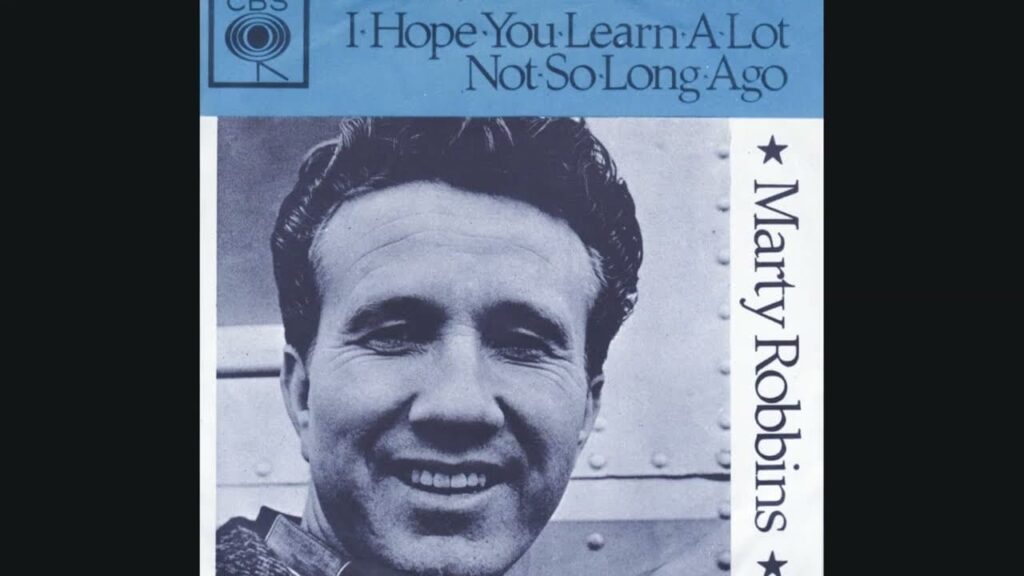
A BITTER SWEET RECKONING WITH YOUTH AND LOVE
Not So Long Ago — a plaintive goodbye to innocence lost and love forsaken.
In 1963, Marty Robbins released “Not So Long Ago” on Columbia Records (catalogue 4‑42831) as a 7″ single. The song charted modestly in his discography yet captured a raw emotional truth: it stands as a quiet moment of introspection between the soaring ballads and cowboy epics that would define much of his legacy.
Marty Robbins wrote the song himself, and though “Not So Long Ago” did not climb to the top of the country charts, it nonetheless reflects a deeply personal voice — introspective, remorseful, human. The lyrics speak of a man looking back on a youthful mistake, lamenting how he let a tender love slip through careless hands.
In the opening lines the narrator confesses that not long ago he held someone dear, someone who “cared for me.” Youth, acting foolishly, he broke her heart and let her go. The repetition of “Once upon a time” in the chorus is more than poetic framing — it accents the wistful distance between past warmth and present regret. Later verses sharpen the ache: someone else now kisses her goodnight; the love that once burned bright is gone forever.
Musically, the arrangement is understated — gentle guitar strums, restrained tempo — lending space for the voice to tremble, for the regret to linger, for the listener to reflect. There is no dramatic Western backdrop, no gunslinger narrative, no duels at dawn. Instead there is an interior western — the desert of memory, the dusty trail of what might have been. It shows another facet of Robbins’ artistry: he was not only a spinner of epic tales, but capable of subtle emotional nuance, of heartbreak rendered without spectacle. Critics and fans who know him chiefly for his sweeping cowboy sagas or chart-topping hits may overlook this gem. But for listeners attuned to sorrow and longing, “Not So Long Ago” remains a quiet confession — one that resonates with anyone who has watched love fade because of youth, stubbornness, or carelessness.
In the broader arc of Marty Robbins’ journey, “Not So Long Ago” represents a moment of introspection — an interlude between the bravado of youthful tunes and the gravitas of his later Western ballads. It echoes universal themes: regret, loss, the passage of time, and the heavy price of words spoken too loud, too soon. As such, it stands as a testament to Robbins’ capacity to evoke complex emotion with simple means — a reminder that sometimes the saddest stories are not those shotguns at dawn, but the silent echoes of love lost long ago.