
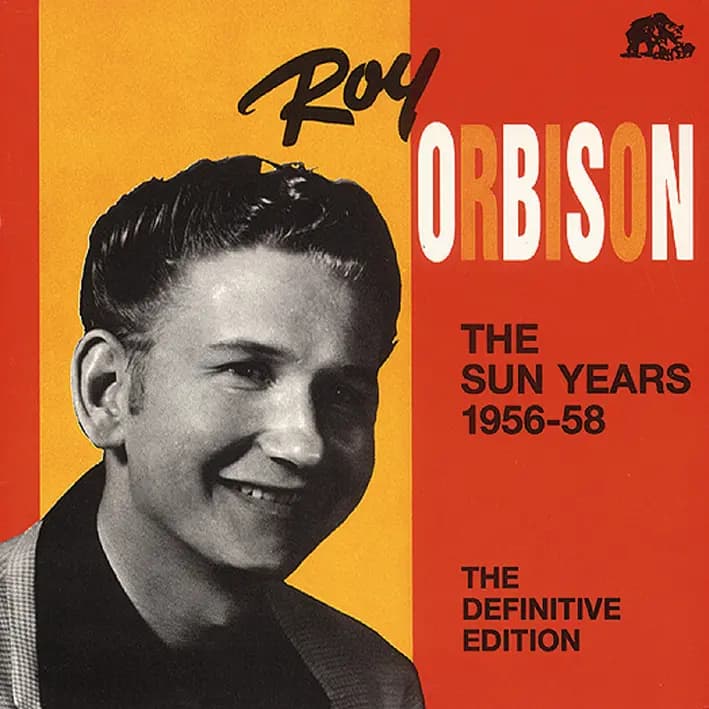
A Haunting Longing That Lingers Across Twenty-Two Days
In “Twenty-Two Days,” Roy Orbison delivers a plaintive hymn of loss and waiting — a quiet but profound agony frozen in time. The song appears on his early LP Lonely and Blue, released in January 1961 by Monument Records. While “Twenty-Two Days” was not among Orbison’s big commercial hits, the album’s release marked a turning point in his evolution from rockabilly roots toward the operatic pop-troubadour he was becoming.
In the delicate space between heartbreak and hope — that liminal emotional zone Orbison navigated better than almost any other singer of his generation — “Twenty-Two Days” stands as a subtle gem. The lyrics — beginning with “Oh, it’s been twenty-two lonely blue days without a word from you / And forty-four million more tears I’ve cried since you walked through that door” — confide in a grief that is patient and unwavering. That framing — days counted in the cold light of memory, tears multiplied into an impossible number — turns heartbreak into something almost mythic.
Musically, the song eschews bombast. Instead, against gentle accompaniment — a restrained arrangement featuring subtle steel guitar, violin, and soft percussion — Orbison’s voice glides with its characteristic mixture of vulnerability and power. The restraint is part of what makes “Twenty-Two Days” so affecting: it doesn’t demand attention through gloss or spectacle, but rather draws the listener inward, toward the raw ache of waiting for a return that may never come.
Thematically, the song is a study in emotional suspension. It does not dramatize the betrayal or amplify the anger; it simply catalogues the emptiness that follows love’s departure. The narrator holds on to “a little hope in my heart,” even as he describes the dreams they once shared as “gone forever.” In that tension — between enduring love and inevitable loss — lies the tragic beauty of the song. The slow passing of days becomes a ritual of mourning, each moment an echo of what once was.
Within Orbison’s broader catalogue, “Twenty-Two Days” occupies a unique place. It is not a smash single like “Only the Lonely” or “Crying,” but it reveals the depth of Orbison’s early songwriting sensibilities and his capacity for emotional subtlety. On the album Lonely and Blue — his first full-length LP for Monument — the track contributes to an overall mood of longing and melancholy, setting the foundation for Orbison’s later mastery of the romantic ballad.
What endures most in “Twenty-Two Days” is not its chart success — there is little evidence it charted at all — but the haunting echo of its sorrow. In the arc from youthful rockabilly to the soaring, heart-wrenching ballads of his mid-career, this song is a quiet milestone: a voice reaching through empty days, refusing to let love’s memory fade. And for those who listen with patience, the longing embedded in those twenty-two days can still reverberate decades later, like a distant, unending ache.