
A Quiet Fracture at the Heart of Love
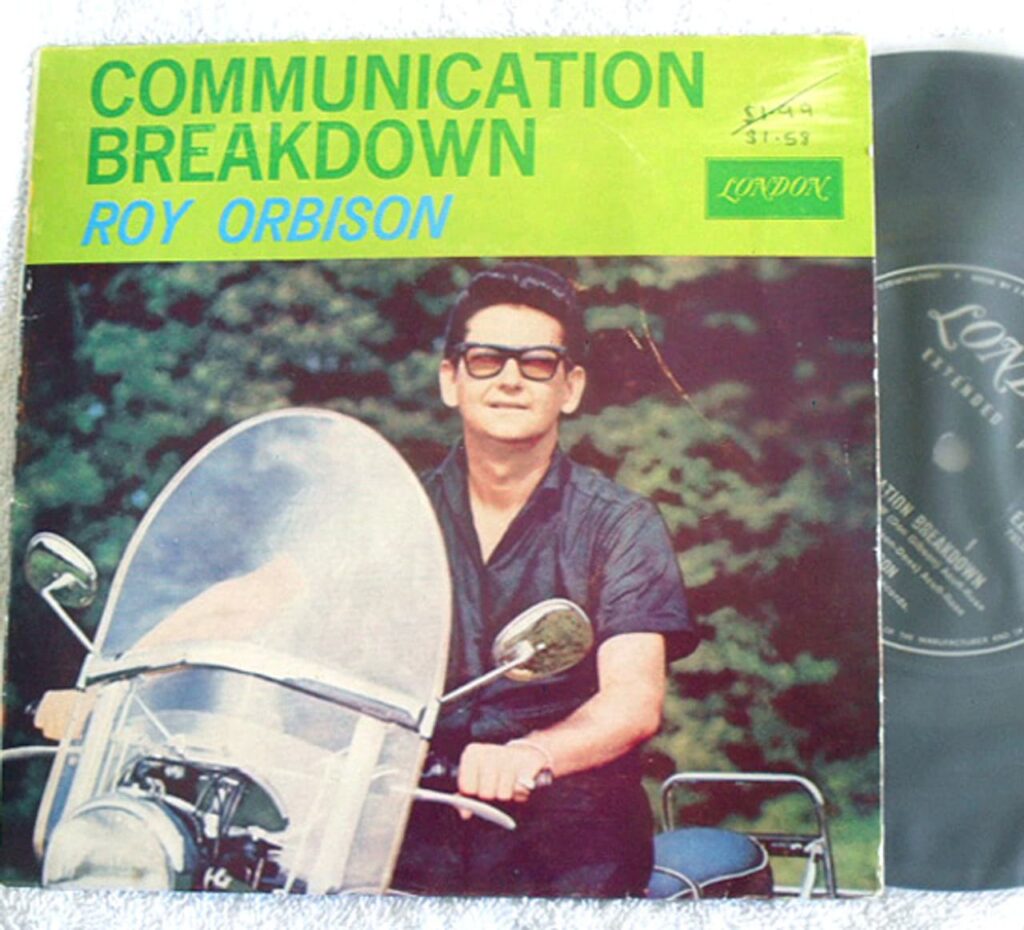
When Communication Breakdown landed on the airwaves in late 1966, it found its way into the lower reaches of the U.S. pop charts — peaking at No. 60 on the Billboard Hot 100.Yet the song took on a richer life beyond America: issued a few months later on Cry Softly Lonely One (1967), it resonated strongly in Australia, where it climbed into the Top 10. Behind it stands the singular voice of Roy Orbison, accompanied by co-writer Bill Dees — a track that bears the weight of heartbreak in gentle but unrecoverable decay.
In turning to Communication Breakdown, one enters a terrain where love has not been shattered by violence or betrayal but by the slow poison of neglect — by thousands of unspoken words, by distance creeping into daily rituals, by lives too busy to notice the creeping frost of indifference. The lyrics admit it plainly: “We never walk, we never talk … we never find the time to be close again.” The song doesn’t dramatize the demise; it allows it to unfold in shades of quiet regret. The repetition of the title phrase — “communication breakdown, communication breakdown” — becomes itself a mournful rhythm, a mantra for the silence that has settled between two souls.
Musically, the arrangement is modest yet deeply effective: chords shifting in E-major, with occasional E7 and A inflections, carry a sense of homespun melancholy — the kind that feels raw because it’s familiar, because life often unravels this way: not in shattering bursts, but in soft, weary sighs. Orbison’s voice, always capable of sweeping grandeur, here is tempered — not with the soaring vulnerability of “Crying” or “In Dreams,” but with a lower, earth-worn timbre that embodies resignation rather than desperation. The effect: rather than a grand tragedy, we hear the heartbreaking dignity of a relationship whose demise is both inevitable and pervasive.
In context, Communication Breakdown emerges during a turbulent phase of Orbison’s career. By the mid-1960s, the music landscape had shifted: the British Invasion and the psychedelic tide were reshaping popular taste, and many of the old-guard voices struggled to find footing. For Orbison, the release of Cry Softly Lonely One — and singles like this — was less a triumphant return than a quiet defiance: a refusal to abandon the emotional realism and melodic subtlety that defined him, even as the world turned its ear elsewhere. Indeed, this single found its most fervent embrace not at home but across oceans, in a place where the sting of longing — the ache for connection — translated beyond cultural boundaries.
Today, Communication Breakdown stands as one of those late-period gems in Orbison’s catalog: not a soaring hit, but a deep cut with a heart heavy from experience. It reminds the listener that love’s undoing rarely arrives as a thunderbolt — more often, it seeps in quietly, in empty spaces once filled with laughter, in the absence of words once spoken daily. In that silence, the song finds its haunting beauty — and in that heartbreak, its enduring truth.