
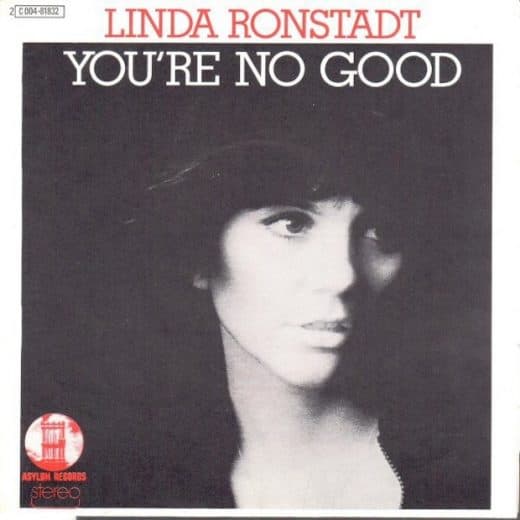
A reckoning of heartbreak that turns vulnerability into unmistakable power
When Linda Ronstadt released You’re No Good as the lead single from her 1974 album Heart Like a Wheel, the track surged to the top of the Billboard Hot 100 in early 1975, securing her first number one hit and redefining the artistic direction of her already rising career. Positioned on an album that blended country, rock, and soul with uncommon finesse, the song immediately stood out for its emotional directness and its bold, cinematic tension. It became the moment where Ronstadt’s interpretive genius crystallized into something unmistakably her own.
The origins of You’re No Good stretch back more than a decade before Ronstadt recorded it, yet her version became the definitive reading because she reshaped the material into a dramatic emotional landscape. Rather than delivering a straightforward breakup tune, she created an atmosphere charged with suspicion, wounded pride, and a hard-earned sense of liberation. Her vocal approach transforms the narrative into a confrontation, a final accounting between two people who have exhausted every chance at reconciliation. The arrangement deepens that story: the sparse opening guitar, the slow build of percussion, and eventually the commanding string lines operate like emotional architecture, guiding the listener from quiet resignation to towering resolve.
What gives the performance its enduring resonance is the interplay between restraint and eruption. Ronstadt begins almost conversationally, as if revealing a private disappointment. But as the track unfolds, her voice shifts into something far more defiant. She layers tenderness with fire, allowing each line to carry the weight of a relationship that has frayed beyond repair. Her phrasing refuses melodrama. Instead, she chooses clarity, the kind that arrives when a person finally sees someone for who they truly are. The famous final refrain captures that transformation perfectly. It lands not as bitterness, but as truth spoken plainly.
Musically, the track is a study in disciplined intensity. The musicians craft a rhythmic pulse that gradually tightens, echoing the emotional tightening of the narrative. The guitar solo is lean and pointed, almost like an internal monologue breaking through the tension. When the full ensemble swells in the final minutes, it creates the feeling of a door closing on the past, firm and irrevocable.
The cultural legacy of You’re No Good endures because Ronstadt elevated it into something larger than a hit single. She gave the song a sense of catharsis that listeners recognize across generations. It is not merely a declaration of breakup, but a moment of clarity rendered with strength, dignity, and unmistakable artistry.