
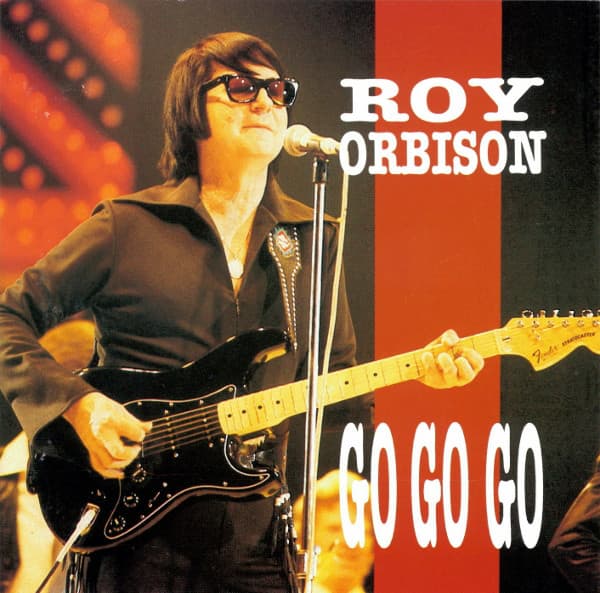
A restless young voice chasing momentum, identity, and escape at the very beginning of a legend.
Released in the mid 1950s, Go, Go, Go (Down The Line) arrived as an early single by Roy Orbison, recorded during his brief but formative period at Sun Records and later preserved on the album Roy Orbison at the Rock House. Upon release, the song did not register a major national chart breakthrough, yet its importance lies elsewhere. It captures a moment before fame, before operatic ballads and cathedral sized heartbreak, when Orbison was still searching for velocity rather than transcendence.
What makes Go, Go, Go (Down The Line) so compelling is not commercial impact but intent. This is Orbison in motion, both literally and artistically. The song surges forward with a propulsive rhythm rooted in rockabilly and early rhythm and blues, driven by urgency rather than polish. The repeated command to move forward feels less like a dance floor chant and more like a personal mantra, as if the singer is urging himself to outrun uncertainty.
Lyrically, the song is spare, almost blunt. There is no elaborate storytelling, no grand romantic collapse. Instead, there is momentum. The phrase “down the line” functions as a promise and a threat, suggesting a future that remains undefined but unavoidable. In this early work, Orbison is not yet the chronicler of emotional devastation. He is a young artist staring at the road ahead, aware that standing still is not an option.
Musically, the recording reflects Sun Records’ raw aesthetic. The guitar lines snap and echo, the rhythm section stays lean, and Orbison’s voice, still untrained in the operatic control that would later define him, pushes against its limits. Even here, however, there are hints of what would come. His phrasing stretches beyond the bar lines, and his vocal tone already carries a yearning that feels disproportionate to the simplicity of the lyrics. It is as if his voice is too big for the song, straining toward something larger.
In the context of Orbison’s legacy, Go, Go, Go (Down The Line) stands as a document of origin. It shows an artist absorbing the language of early rock and roll while quietly preparing to rewrite it. The absence of chart success becomes irrelevant when viewed through this lens. The song is not a destination. It is a departure point.
Listening today, the track carries a different weight. Knowing the monumental emotional architecture Orbison would later build, this early rush of sound feels almost fragile. There is innocence here, but also determination. The song does not look back, and it does not linger. It moves forward relentlessly, just as Orbison himself would, traveling down the line toward a voice and vision that would ultimately change the sound of popular music.