
Where a Wounded Heart Finds Its Signal in the Static
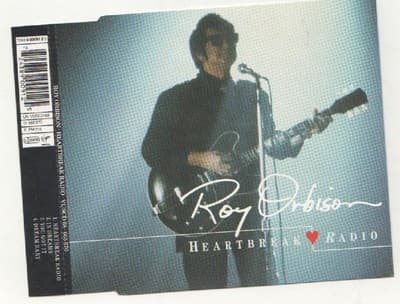
Heartbreak Radio by Roy Orbison, released in 1992 from the posthumously issued album King of Hearts, arrived as a poignant testament to one of the most singular voices in 20th-century music. Issued as a single in late 1992, the song reached number 36 on the UK Singles Chart, marking a modest but meaningful chart presence for a recording emerging years after the artist’s passing. It also registered on other charts internationally, demonstrating the enduring resonance of Orbison’s performance decades after the original sessions.
In its simplest form Heartbreak Radio is a song about the echo of absence, one that takes heartbreak out of the private spaces of the heart and broadcasts it out into the ephemeral airwaves. A cover of a song originally recorded by Frankie Miller and Troy Seals, Orbison’s interpretation—produced by Jeff Lynne of Traveling Wilburys fame—was shaped in the twilight years of his life and completed through devoted studio collaboration after his death.
Unlike the soaring ballads that cemented Orbison’s legend in the early 1960s, Heartbreak Radio doesn’t dwell in wide-open lamentation so much as it positions the listener inside the fevered urgency of romantic loss. The narrative voice is not detached or elegiac; it is restless, even conspiratorial, imagining love’s departure as a crime scene and its evidence broadcast across the airwaves. Orbison’s vocal—rich with the slight tremor of regret and desire—inhabits the lyric with such emotional commitment that the familiar motifs of loneliness become visceral: the airwaves themselves become an indictment of memory.
The song’s thematic core hinges on the interplay between love’s innocence and its potential for devastation. Here the radio is not merely a metaphor for the ubiquity of melancholy music; it becomes a surrogate confidant, a confessional booth, a public square where the protagonist’s private wounds are played back in an endless loop. When Orbison intones the refrain about “a bad record on the heartbreak radio,” it feels less like a clever turn of phrase and more like a cultural truth: that heartbreak, in all its forms, is broadcast back to each of us a thousand times over through the songs that shape our emotional lives.
Musically, the track is a testament to the seamless fusion of Orbison’s classic sensibilities with the contemporary production sheen of the early 1990s. The arrangement balances restrained country-tinged acoustic textures with a rhythmic propulsion that keeps the song forward-moving even as its narrative circles back to loss and longing. There is a spatial elegance in the production that allows Orbison’s voice—still resonant with operatic clarity—to linger long after each line has faded.
In the pantheon of Orbison’s work, Heartbreak Radio may not eclipse the monumental impact of his 1960s masterpieces, yet it occupies a unique place: as a late chapter that underscores his lifelong engagement with vulnerability and strength, romance and ruin. It is a reminder that heartbreak is not a private affliction but a shared transmission, an emotional frequency we all tune into at one time or another.