
A frontier love story where devotion and destiny stand quietly against the passing of time
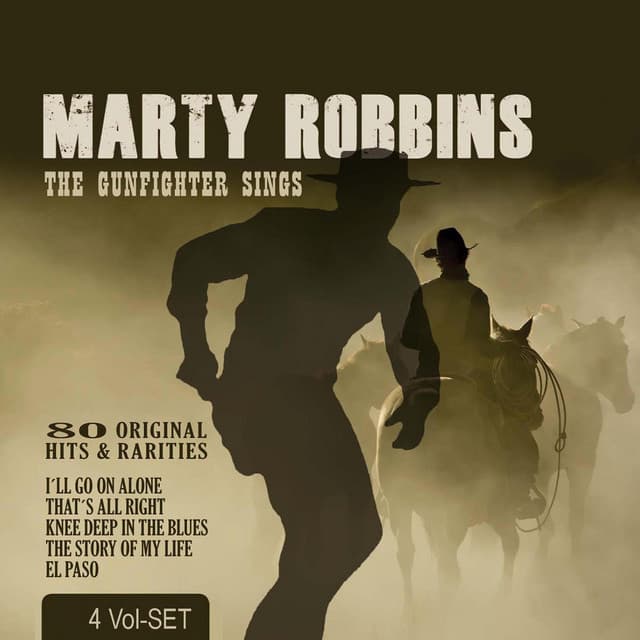
Upon its release in 1960, Rose of Ol’ Pawnee by Marty Robbins rose to No. 2 on the Billboard Hot Country Singles chart, affirming Robbins’ singular gift for narrative songwriting within the country tradition. The song appeared on More Gunfighter Ballads and Trail Songs, an album that continued his distinctive fusion of Western folklore, romantic fatalism, and meticulous musical restraint. By this point in his career, Robbins was no longer merely a hitmaker. He was becoming an archivist of imagined American memory, preserving stories that felt older than the vinyl that carried them.
Rose of Ol’ Pawnee stands apart even within Robbins’ celebrated Western canon. Where many frontier songs lean on violence, pursuit, or moral reckoning, this one centers on longing and loyalty. The song unfolds as a solemn confession from a man bound by love to a Native woman from the Pawnee tribe, a love defined not by conquest or tragedy, but by patience and devotion. Robbins does not dramatize the narrative. Instead, he allows it to breathe, trusting the listener to feel the ache beneath the surface.
Musically, the arrangement is spare and deliberate. The melody moves gently, almost reverently, carried by Robbins’ famously controlled baritone. There is no rush to the phrasing. Each line lands with care, as though spoken across distance rather than sung into a microphone. This restraint is central to the song’s emotional weight. Robbins understood that frontier ballads gained power not from excess, but from understatement. In Rose of Ol’ Pawnee, silence is as important as sound, and pauses become emotional punctuation.
Lyrically, the song reflects a romantic idealism that was already becoming rare in popular music by 1960. The narrator’s promise is absolute, yet never self-pitying. He does not demand reciprocation or resolution. His love exists as a constant, independent of circumstance. In this way, the song subtly resists the dominant narratives of Western music that often frame Native figures as symbols rather than individuals. While still shaped by the cultural limitations of its era, Rose of Ol’ Pawnee approaches its subject with dignity and tenderness, emphasizing humanity over myth.
Within Robbins’ broader body of work, the song reinforces his role as a storyteller who favored emotional truth over spectacle. This was the same artist who could turn a gunfight into moral theater and a cowboy into a tragic hero, yet here he chooses stillness. The frontier is not a battlefield but a memory. Love is not a conquest but a vow carried quietly through time.
More than six decades later, Rose of Ol’ Pawnee endures not because of chart statistics or genre loyalty, but because it understands something essential about longing. It recognizes that some loves are not meant to be resolved, only honored. In the hands of Marty Robbins, that recognition becomes timeless, preserved in grooves that continue to whisper across generations, waiting for listeners willing to lean in and listen closely.