
Quiet Devotion Blooming in Everyday Imagery
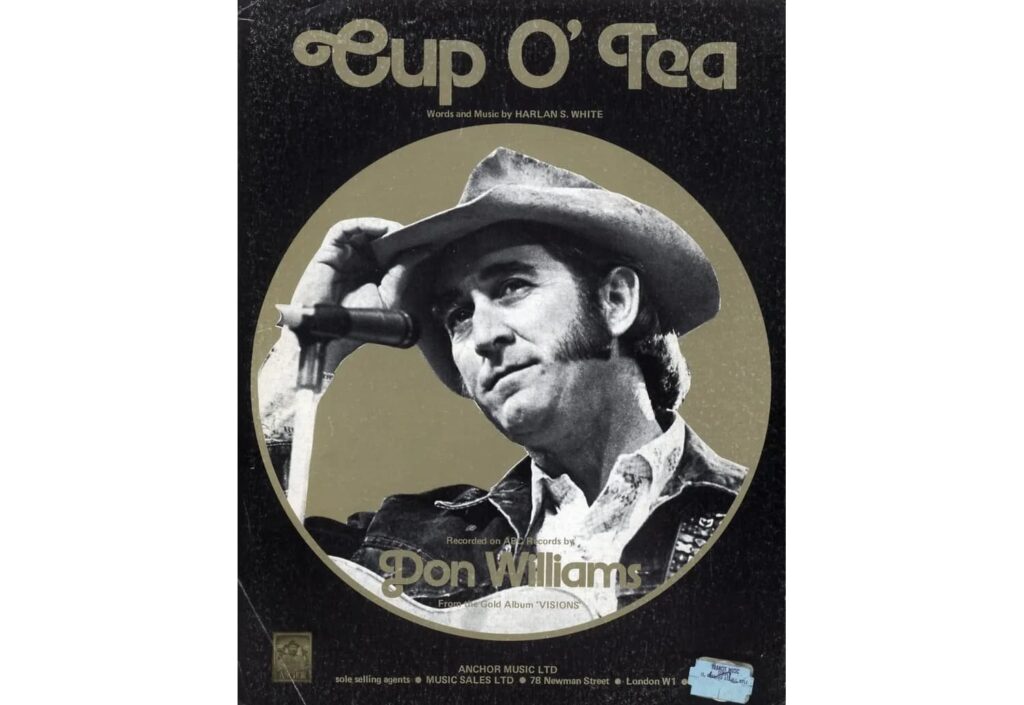
Cup O’ Tea sits among the deep cuts on Don Williams’ 1977 album Visions, a record that itself occupies a cherished place in the catalog of gentle country music from the 1970s. Though it was not issued as a single and therefore did not chart on the Billboard country charts in the way many of Williams’ signature songs did, the track endures as a beloved album piece that resonates with listeners for the warmth and simplicity of its sentiment. It also appears on later compilations such as Don Williams Greatest Hits, a testament to its lasting appeal among fans.
With a lyric penned by Harlan White and delivered in Williams’ trademark calm baritone, Cup O’ Tea unfolds like an intimate conversation held across a kitchen table at dawn. The imagery is unpretentious yet evocative: the speaker resolves not to be the “fiery sun” or the “deep blue sea,” metaphors often invoked for passion and vast romantic longing. Instead, he yearns to be a “cup o’ tea” to his beloved, an embodiment of comfort, warmth, and familiarity. This creative choice of metaphor captures a kind of humble love that refuses spectacle for steady sustenance.
On Visions, a record that balances reflection with melodic grace, Cup O’ Tea contributes to the broader narrative arc of relational depth and grounded affection. Williams’ interpretations were never about grand theatricality; rather, he carved his identity into the hearts of listeners through a measured delivery and a repertoire that valued emotional sincerity over flash. In Cup O’ Tea, that ethos is present in every line. The lyric’s litany of rejected exalted images — sun, sea, freight train, bird in the air — serves as a refrain that deepens with each iteration, reinforcing that true devotion often means choosing constancy over dramatics.
Musically, the song maintains a relaxed tempo and uncomplicated arrangement that foregrounds Williams’ voice and the lyrical content. This aesthetic aligns with his broader body of work from the era, where understated production allowed storytelling and emotional resonance to take precedence. The melody moves with a walking pace, almost as if the listener themselves is sitting back with that comforting cup, contemplating the reciprocity of commitment and the quiet power of daily presence.
The beauty of Cup O’ Tea lies not in chart positions but in the way it has lodged itself in the memories of those who treasure Don Williams’ calmer expressions of love. It exemplifies a strand of country music that finds profundity in simplicity — where the ordinary becomes sacred through devotion, and where being someone’s “cup o’ tea” is the highest compliment one lover can offer another.