
A Quiet Surrender to Heartbreak Where Acceptance and Loss Are One
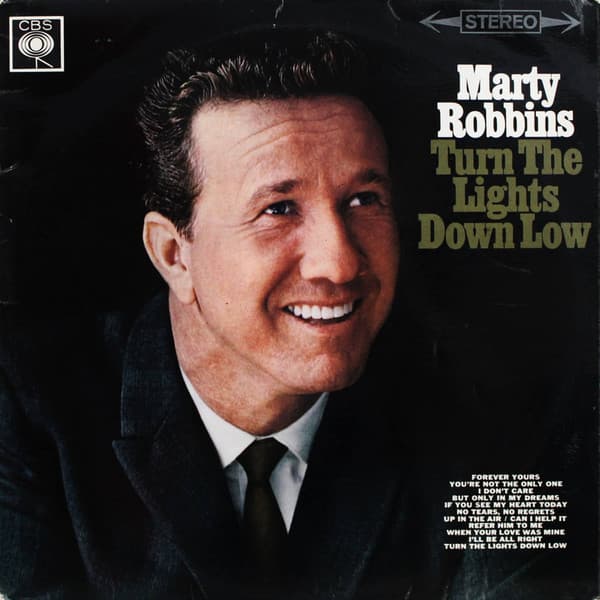
No Tears No Regrets by Marty Robbins stands in elegant contrast to the bravado of much classic country music because it frames the end of love not as a moment of vengeance or recrimination but as a quiet, dignified letting go. Recorded by Robbins and released in 1965 as part of his album Turn The Lights Down Low, the song occupies a thoughtful corner of his expansive catalog where emotional subtlety outweighs chart ambition. The track itself did not emerge as a high-charting single in its own right, yet it resonates as a poignant album cut that embodies the mature emotional terrain Robbins explored throughout his career.
Upon its original release Turn The Lights Down Low found its way into listeners’ collections during a period when Robbins was adeptly traversing both country and popular music sensibilities. Within that context, No Tears No Regrets is less a commercial flourish and more a compositional statement about love’s irrevocable end. It exists against the backdrop of a musician whose career by 1965 had already encompassed myriad moods of heartbreak, longing, regret, and redemption. While not singled out for major chart success, the song demonstrates Robbins’ ability to articulate complex emotional balances with crystalline simplicity.
Lyrically, No Tears No Regrets strips away melodrama in favor of candor. The narrator acknowledges responsibility for the demise of his love while simultaneously confronting the hollow remnants of affection with a restrained gaze. “No tears no regrets it’s just goodbye my love” opens the meditation with a line that is both stark and eloquent, revealing a voice that has loved deeply and wisely. The repeated insistence on an absence of tears does not signal stoicism or emotional numbness. Rather, it reflects a profound understanding that some departures require acceptance more than lamentation. This tonal choice situates the song within a lineage of country ballads that favor introspection over catharsis, illustrating Robbins’ nuanced grasp of the genre’s emotional grammar.
Musically, the arrangement supports this thematic core with gentle instrumentation that foregrounds Robbins’ warm, resonant voice. The relative sparseness allows each lyrical line to register with clarity, inviting listeners to inhabit the emotional space between each phrase. There is no rush to resolve or embellish; instead the song unfolds as a quiet confession. In doing so, it aligns with Robbins’ broader artistic sensibilities, which often married narrative detail with expressive restraint. Where some country songs of the era approach heartbreak with raucous lament, No Tears No Regrets finds strength in its calm acceptance
The legacy of No Tears No Regrets endures not because of chart accolades but because it offers an unguarded reflection on the human condition. For aficionados of Robbins and students of classic country alike, the song stands as a testament to emotional honesty. It showcases Robbins’ ability to record not only stories of wild landscapes and rugged characters but also the interior terrains of loss and quiet resolution. In this way, the track continues to speak to listeners who seek in music not merely entertainment but a mirror to the subtleties of the heart.