
A tender confession where longing outweighs certainty, and love is measured by what the heart dares to imagine rather than what life allows.
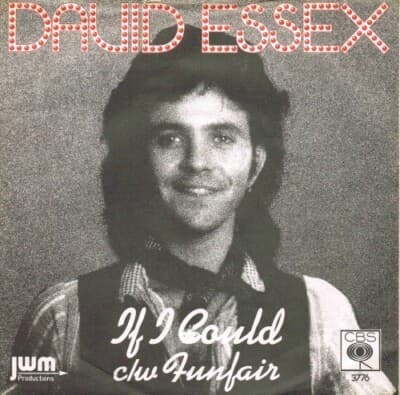
When David Essex released If I Could in 1975, it quickly resonated with listeners, becoming a UK Top 10 hit and securing its place on the album All the Fun of the Fair. Positioned within a period when Essex was transitioning from teen idol to reflective songwriter, the song stood out not through spectacle or bravado, but through restraint. It arrived quietly, yet with a clarity of emotion that lingered far beyond its chart run, revealing an artist increasingly confident in understatement and emotional nuance.
At its core, If I Could is built on conditional language, on wishes that never quite become promises. The title itself establishes the emotional architecture of the song. Everything is framed as possibility rather than declaration. This is not a love song that claims certainty or triumph. It is a song that pauses, weighs the cost of feeling, and speaks only when honesty demands it. Essex does not sing as a man convinced of his power to love perfectly, but as one aware of his limitations, emotional, personal, and temporal.
Lyrically, the song unfolds like a private admission overheard rather than a performance delivered. Each line feels carefully placed, as though the singer understands that too much emphasis would fracture the mood. The words suggest devotion, but they are tempered by an awareness of fragility. Love here is not portrayed as salvation. It is portrayed as responsibility. To say “if I could” is to acknowledge that love requires more than desire. It requires readiness, sacrifice, and timing, none of which are guaranteed.
Musically, the arrangement supports this emotional economy. The melody moves gently, almost cautiously, allowing space for reflection between phrases. The instrumentation avoids excess, favoring warmth and balance over dramatic flourish. This restraint amplifies the song’s intimacy. It feels less like a single designed for radio impact and more like a moment captured in solitude, a thought articulated just clearly enough to be shared.
Within All the Fun of the Fair, If I Could serves as a quiet counterweight to the album’s broader theatrical themes. Where other tracks explore spectacle, ambition, and public identity, this song turns inward. It suggests that behind the stage lights and narrative arcs lies a simpler, more vulnerable truth. That even success does not resolve the fundamental uncertainties of the heart.
Decades later, If I Could endures because it refuses easy conclusions. It honors the idea that love is often felt most deeply in moments of hesitation, when words fail to keep pace with emotion. In that space, David Essex captured something timeless. Not the certainty of love fulfilled, but the ache of love contemplated, measured, and held with care.