
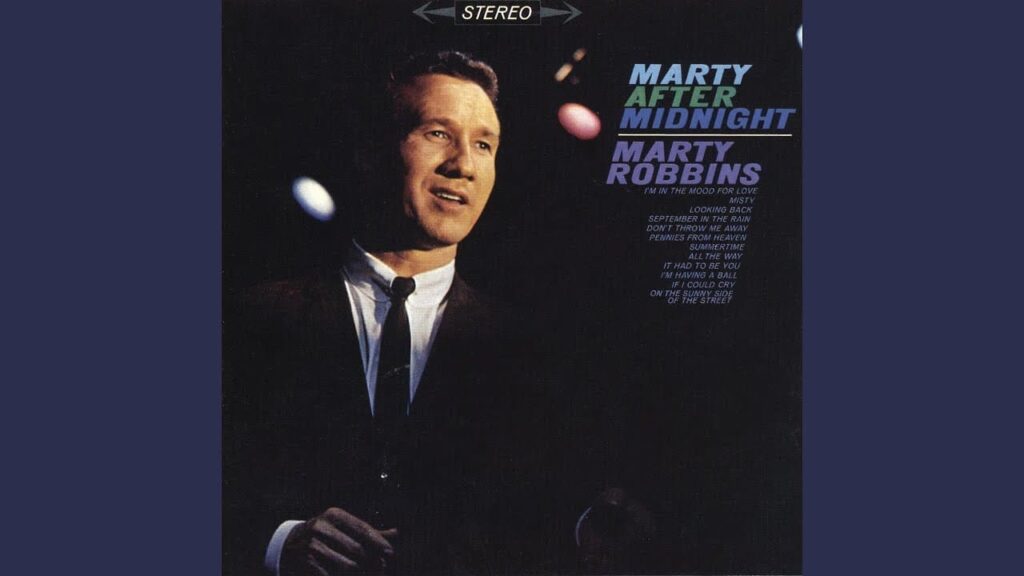
I’M HAVING A BALL IS A WINDBLOWN DECLARATION OF LIBERATION AND SELF-AFFIRMATION IN THE WAKE OF HEARTBREAK
“I’m Having a Ball” stands as one of Marty Robbins’s most cheekily defiant moments in a catalog better known for its wide emotional range from cowboy ballads to sorrowful heartbreak. Released in 1962 as part of the reflective and stylistically varied album Marty After Midnight, the track captures Robbins’s ability to turn a simple lyrical concept into a vivid character portrait of someone emerging from emotional duress into full-throated personal freedom.
From the very first line, “I’m having a ball goin’ out on the town every night,” Robbins’s protagonist announces a joyous reversal of expectations. Where a scorned lover might be expected to languish, Robbins instead paints a portrait of exuberant self-rediscovery: “painting it red,” meeting new people, laughing as if nothing had ever gone wrong. This is not wistful regret cloaked in clever phrasing; it is the sonic equivalent of stepping out into the night air after months of confinement and feeling the world stretch open in every direction.
Musically, “I’m Having a Ball” is concise and unpretentious. Clocking in at just over two minutes on Marty After Midnight, the arrangement leans into brisk rhythms and uncluttered instrumentation that complement Robbins’s warm, steady vocal delivery. The brisk pacing underscores the song’s thematic thrust: movement, momentum, and a refusal to be held back by emotional baggage. There is no lingering sorrow here. Instead, Robbins gives us a lean, energetic performance that keeps the listener propelled forward with him.
Lyrically, the song stands out in Robbins’s repertoire for its unabashed celebration of turning the page. Where many classic country songs frame post-breakup experience as sorrowful or introspective, “I’m Having a Ball” boldly reframes it as an opportunity for self-affirmation and self-possession. The narrator’s repeated admissions that he “only cares about me” function not as narcissistic brags but as declarations of self-worth reclaimed after disappointment. In a genre often steeped in themes of longing and loss, such a perspective feels refreshing and surprisingly modern.
Thematically, the song also reveals a deeper layer in Robbins’s artistry: his capacity to inhabit a variety of emotional states and personas without losing his essential humanity. Whether singing dust-kicked cowboy epics or intimate love songs, Robbins always imbues his material with a storyteller’s eye for nuance. In “I’m Having a Ball,” that nuance lies in the balancing act between hurt and exhilaration. The breakup is acknowledged but rendered almost incidental to the narrator’s reclamation of life and joy.
Over time, “I’m Having a Ball” has become a favorite deeper cut among collectors and aficionados precisely because it encapsulates Robbins’s versatility. It is at once a slice of personal triumph, a snapshot of early 1960s country-pop crossover sensibility, and a candid assertion that joy can follow heartache if one chooses to embrace it. While it may not have scaled the charts like some of Robbins’s more famous hits, its legacy endures in the way it invites listeners to celebrate resilience with a knowing smile and a toe-tapping rhythm.