
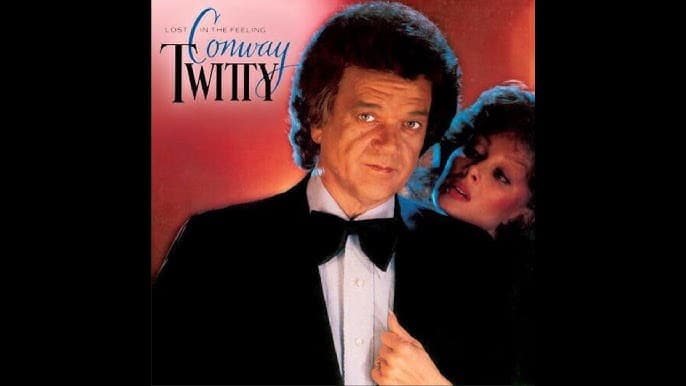
Seasoned vow of devotion, sung not as youthful promise but as lived truth tested by time.
When Conway Twitty released his recording of Three Times A Lady, it arrived as part of the album Heart & Soul, and it quickly found its place on the country charts, embraced by an audience that had aged alongside his voice. By that point in his career, Twitty was no longer chasing reinvention or relevance. He was refining something rarer: emotional authority earned through years of public triumph and private endurance. This song, already familiar to the broader popular culture, took on a different gravity when filtered through his distinctly country sensibility.
What makes Three Times A Lady compelling in Twitty’s hands is not novelty but perspective. The song itself is constructed as a confession, a measured acknowledgment of constancy rather than a dramatic declaration of passion. It speaks in the language of gratitude, of a man pausing long enough to recognize what has remained when everything else has shifted. In Twitty’s interpretation, that pause feels earned. His vocal does not rush toward sentiment. It settles into it, allowing the weight of experience to shape each phrase.
By the time this recording was made, Conway Twitty had lived several musical lives. He had crossed from rockabilly into country, survived changes in taste, and endured the personal costs that often accompany longevity in popular music. That history matters here. When he sings about devotion that deepens rather than fades, it sounds less like aspiration and more like inventory. There is restraint in the delivery, a deliberate avoidance of embellishment that mirrors the song’s emotional logic. Love, the song suggests, is not proven by excess but by endurance.
Musically, Twitty’s version leans into warmth and simplicity. The arrangement does not compete for attention. It supports the vocal, giving space for phrasing to carry meaning. This is not a performance designed to overwhelm. It is designed to remain. The melody unfolds gently, reinforcing the idea that lasting love is not built in climactic moments but in repeated, unremarkable acts of care. The song’s structure reinforces that message, returning again and again to its central affirmation, each time with slightly more gravity.
Culturally, Three Times A Lady occupies an interesting place in Twitty’s catalog. It reflects a period when country music increasingly welcomed songs that spoke to mature listeners without irony or apology. Twitty understood that audience instinctively. His appeal had always been rooted in emotional directness, and here he channels that instinct into something almost reflective. This is not a song sung toward the future. It is sung across time, acknowledging what has already been given and received.
In the end, Three Times A Lady as recorded by Conway Twitty stands as a study in measured devotion. It is the sound of an artist confident enough to let understatement do the work, trusting that truth spoken quietly can resonate longer than anything shouted. For listeners who recognize love not as a beginning but as a continuation, this performance remains quietly authoritative, a testament to the grace that arrives when feeling is tempered by years.