
A hushed confession where love, faith, and temptation circle each other in the half light of moral doubt.
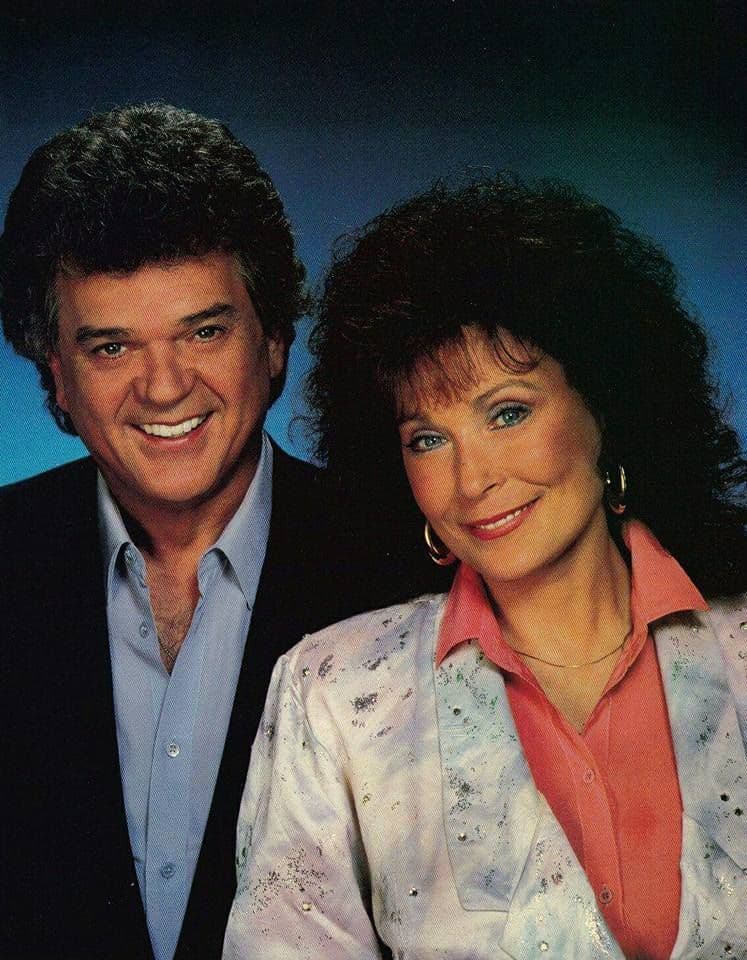
Released in 1971, Lead Me On rose to the summit of the Billboard Hot Country Singles chart, becoming a number one hit for Loretta Lynn and Conway Twitty and lending its name to their duet album Lead Me On, a record that further cemented their singular chemistry. By the time the song reached radio, both artists were already titans of country music, yet this collaboration carried a quieter, more dangerous intimacy than many of their earlier successes. It did not announce itself with bravado. It whispered, and in that whisper lay its power.
At its core, Lead Me On is a song about desire filtered through conscience. Unlike the playful sparring or outright heartbreak that often defined male female duets of the era, this song inhabits a moral gray zone. The narrators are adults, fully aware of the consequences of what they are feeling, yet unable to deny the pull between them. The opening lines establish restraint rather than indulgence, framing temptation as something that must be guided carefully rather than unleashed. When Conway Twitty sings, his voice carries the weight of hesitation, a man asking not for permission but for direction. Loretta Lynn, in response, does not play the role of a passive object of desire. She becomes the conscience, the emotional anchor, reminding him and herself of the cost that comes with crossing an invisible line.
What makes Lead Me On endure is how subtly it navigates its themes. There is no explicit scandal spelled out, no dramatic confession of infidelity. Instead, the song relies on implication and tone. The phrase itself suggests surrender, but also responsibility. To lead someone on can mean encouragement, but it can just as easily mean deception. That double meaning gives the song its quiet tension. Every harmony feels like a negotiation. Every pause feels intentional. The arrangement, restrained and unhurried, allows the voices to dominate, reinforcing the sense that this is a private conversation overheard rather than a performance staged for applause.
Within the broader arc of Loretta Lynn and Conway Twitty’s partnership, Lead Me On stands as one of their most emotionally mature statements. Their duets often explored relationships from both sides with uncommon honesty, but here they strip away humor and bravado in favor of vulnerability. It reflects a period in country music when adult themes were being addressed with increasing sophistication, especially by artists who trusted their audience to understand nuance without explanation.
Decades later, Lead Me On remains compelling not because it shocks, but because it understands human weakness. It recognizes that love is not always pure or destructive, sometimes it is simply unresolved. In the canon of classic country duets, it endures as a masterclass in restraint, proving that the most powerful stories are often told in lowered voices, where every word matters and every silence speaks.