
A quiet confession of intimacy and distance where love survives not through passion but through uneasy compromise.
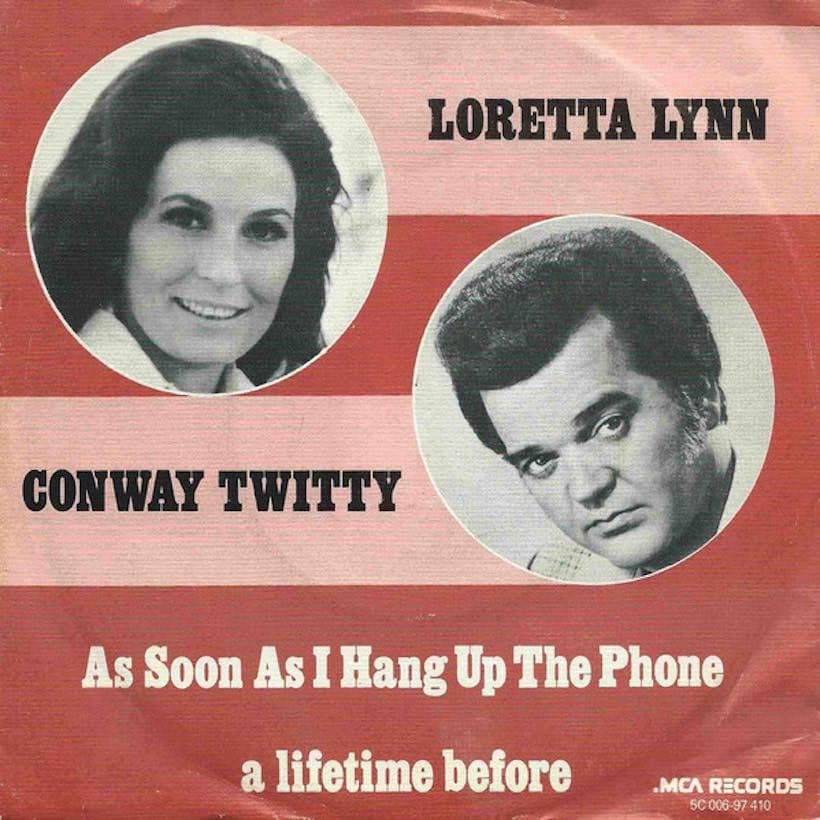
Released in 1974, Living Together Alone rose to the top of the Billboard Hot Country Singles chart as one of the defining duet successes of Conway Twitty & Loretta Lynn, appearing on their album Dynamic Duo. By the time the record reached listeners, Twitty and Lynn were already an established force in country music, known for songs that dramatized marriage not as fantasy but as lived experience. This particular single arrived not as a sensational statement, but as a sober reflection, and its chart triumph signaled just how deeply audiences recognized themselves in its emotional restraint.
At its core, Living Together Alone is a song about proximity without connection, a theme rarely addressed so plainly in country music before this era. Rather than focusing on betrayal or explosive heartbreak, the lyric inhabits a quieter, more unsettling space. Two people still share a home, still share habits and history, yet the emotional bond that once animated those shared spaces has eroded. The title itself functions as a paradox, suggesting that loneliness does not require physical separation. In fact, the song argues the opposite. Loneliness can be most acute when another person is always present.
What gives the song its enduring power is the way Conway Twitty & Loretta Lynn divide the emotional labor. Twitty’s voice carries resignation, a subdued masculinity stripped of bravado, while Lynn answers with a controlled sadness that never tips into self pity. There is no villain here, no dramatic confrontation. Instead, both voices accept a truth that feels almost too ordinary to articulate. Love has not ended in fire, but in silence. This balance is crucial, as it prevents the song from moralizing. It simply observes.
Musically, the arrangement reinforces the lyrical tension. The tempo is restrained, the instrumentation spare, allowing the voices to occupy the center without distraction. Nothing rushes. Nothing erupts. This measured pacing mirrors the emotional stasis of the characters themselves. They are not moving forward, but they are not leaving either. The song lingers, much like the unresolved relationship it portrays.
Within the broader legacy of Dynamic Duo, Living Together Alone stands as one of the most emotionally mature entries in Twitty and Lynn’s collaborative catalog. Where some of their other hits leaned into playful banter or dramatic conflict, this song chose honesty over theatrics. It trusted the listener to understand nuance, to recognize the ache of familiarity turned hollow.
Decades later, its impact remains undiminished. The song continues to resonate because it addresses a reality that rarely ages. Relationships do not always end with slammed doors. Sometimes they fade quietly, day by day, until two people realize they are still together in every practical sense, yet emotionally worlds apart. In capturing that moment with such clarity and restraint, Living Together Alone secures its place not just as a chart topping single, but as one of the most quietly devastating duets in classic country music history.